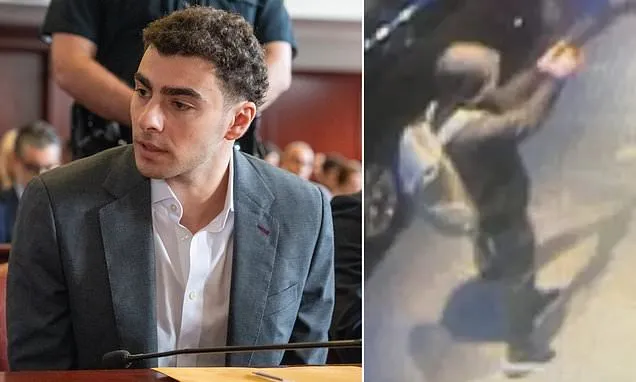
Luigi Mangione, accused of fatally shooting UnitedHealthcare CEO Brian Thompson, is reportedly poised to change his plea to guilty in a federal court hearing. This strategic shift, anticipated to occur on Friday, represents a high-stakes maneuver by his legal team, aiming to navigate the complex legal landscape and potentially avert a life sentence. A former prosecutor, David Gelman, who now practices criminal defense, has offered insights into the potential motivations and implications behind this anticipated change of plea.
The Anticipated Guilty Plea and Its Ramifications
Mangione, 28, faces federal charges related to stalking resulting in the death of an executive. He had previously entered a plea of not guilty. However, reports indicate that his defense attorneys are preparing to reverse this stance at a hearing scheduled for Friday morning in Manhattan’s Federal Court. This move is seen by legal observers as a calculated gamble, with the primary objective of securing a sentence less severe than life imprisonment without parole.
“There’s a lot happening behind the scenes that none of us know about,” Gelman commented, suggesting that the decision to change the plea is part of a broader, intricate strategy. “I think that’s something we have to keep in mind.” He added, “If I were his attorney, I think it would probably be the best situation for him.”
The federal trial for Mangione was originally slated to commence in January. By pleading guilty now, Mangione is likely hoping to present himself favorably to Judge Margaret Garnett, who will ultimately decide his sentence. Gelman noted that such a plea could potentially lead to Mangione’s eventual release, stating, “I can’t say he deserves it, but at the end of his life he could potentially be freed to live out the rest of it.”
A Dual-Court Strategy: Federal Plea to Derail State Charges
A significant aspect of this legal strategy appears to be the potential impact on the state-level murder charges Mangione also faces. His trial in state court was scheduled to begin the following month. The defense’s plan, according to Gelman, is to leverage the federal guilty plea to argue against the state prosecution based on the principle of double jeopardy, which prevents an individual from being tried twice for the same offense under New York law.
Following the expected guilty plea in federal court, Mangione’s lawyers are anticipated to file a motion to dismiss the state murder charges. They will likely contend that the federal proceedings address the same underlying crime. However, prosecutors on the state level are expected to contest this, arguing that their murder charges are distinct from the federal stalking charges. The ultimate decision on whether the state prosecution can proceed would then rest with the judge presiding over the state case, Justice Gregory Carro.
This legal maneuvering is expected to lead to a series of appeals and counter-appeals, regardless of the outcome. Gelman emphasized that regardless of the double jeopardy argument’s success, the guilty plea would almost certainly lead to the cancellation of the state case’s September 8 start date.
Unusual Competition Between Prosecutors
Gelman described the situation, where both federal and state prosecutors were vying to bring Mangione to trial first, as “unusual.” He elaborated, “This is something you don’t see very often. But due to the publicity, the nature of the offence and the manpower it took just to get him, for both the federal and the state offices, I think that’s probably the main reason.” He suggested that both jurisdictions wanted their opportunity to prosecute the case, driven by a desire for justice, which is not typical in most legal proceedings.
Background of the Case and Arrest
The fatal shooting of Brian Thompson occurred on December 4, 2024, as he was en route to a hotel in Midtown Manhattan. The incident was captured on surveillance cameras. Mangione, originally from Baltimore and an Ivy League graduate, was a fugitive for five days following the murder. His apprehension occurred in Altoona, Pennsylvania, after a McDonald’s manager reported a man matching his description. He was taken into custody by law enforcement officers as he was finishing a meal.
Gelman pointed out that if the federal case had proceeded to trial before the state case, the double jeopardy claim might have been less straightforward, given that double jeopardy is primarily a state law concept governing state trials.
Potential Jury Selection Strategy
Even if the state case were to proceed, with a judge ruling against the double jeopardy defense, Mangione’s legal team has another potential strategy: carefully selecting a jury that might be sympathetic to their client. Gelman suggested that given Mangione’s apparent “cult following” and a defense fund that has reportedly raised substantial amounts, likely from younger supporters, the defense might aim to seat younger jurors.
The rationale, according to Gelman, would be to find jurors who might “potentially think like that, who hate the healthcare industry, they almost want to justify his actions.” He anticipates that the prosecution would strongly object to such a jury selection process, predicting a highly contentious voir dire (jury selection) should the state trial move forward.
Withdrawal of ‘Extreme Emotional Disturbance’ Defense
Earlier in the week, Mangione’s lawyers withdrew a planned defense of “extreme emotional disturbance.” Gelman speculated that this decision was likely based on the recommendations of their own expert analysts. While some reports suggested the withdrawal was an implicit admission of guilt, Gelman offered a more pragmatic explanation.
“I think they wanted to withdraw it because their own experts, their own doctors, probably said to them: look, this is not going to work out in your favor,” Gelman stated. He added, “If we get up there and get cross examined, we could get destroyed.” The current strategy, centered on the guilty plea, aims to avoid such a potentially damaging scenario.
Conclusion: A Calculated Legal Maneuver
The decision by Luigi Mangione’s legal team to pursue a guilty plea in federal court appears to be a multifaceted strategy. It is designed not only to seek a potentially reduced sentence but also to challenge the state’s murder charges through the legal doctrine of double jeopardy. This complex legal dance, involving federal and state courts, potential jury selection tactics, and the strategic withdrawal of certain defenses, highlights the intricate nature of high-stakes criminal defense. The coming days and weeks will reveal the full impact of this calculated gamble.