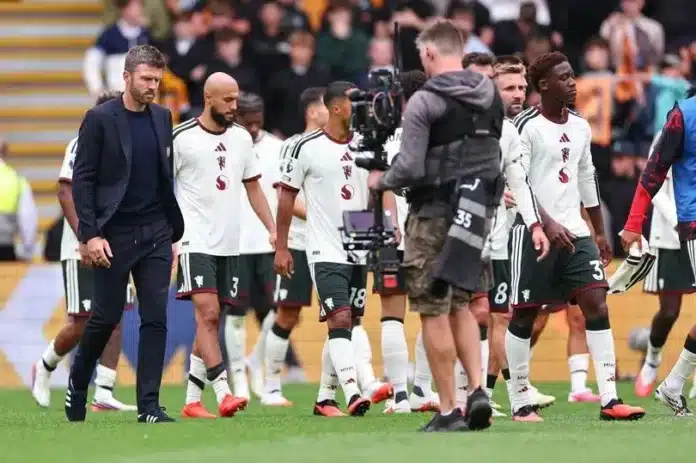
Manchester United’s transfer window decisions are under scrutiny, particularly their failure to secure a reliable backup striker. While the club prioritized midfield reinforcements, the potential departure of a key forward and the subsequent lack of a suitable replacement have raised concerns among fans and analysts. The situation is amplified by the strong performances of a former United academy prospect who has found renewed success elsewhere, leading to speculation that the club may soon face the consequences of this oversight.
Transfer Window Priorities and Missed Opportunities
Throughout the summer transfer window, Manchester United’s primary objective was to overhaul their midfield. However, as the deadline approached, the potential need for additional attacking depth became apparent. While a striker was not at the top of the club’s wishlist, an unexpected development involving Everton’s late pursuit of Joshua Zirkzee prompted a brief consideration of an eleventh-hour signing. Ultimately, United opted against bringing in a new forward, leaving their attacking options largely unchanged, with only Marcus Rashford’s return from injury bolstering the ranks.
The fan base’s grumbles have largely focused on the lack of a new left-back. However, the decision not to sign a backup striker for Benjamin Sesko has also drawn significant criticism. Sesko, who enjoyed a promising debut campaign in English football with 12 goals in 32 appearances, has been working his way back to full match fitness after an injury. His absence from the starting lineup this season has highlighted a clear lack of a focal point in United’s attack.
Assessing the Current Striking Options
In Sesko’s absence, United’s current striking options have struggled to fill the void. Joshua Zirkzee, despite being considered by the club, has not yet demonstrated the level required to consistently lead the line for Manchester United. While other forwards like Bryan Mbeumo and Matheus Cunha can operate in a central role, their strengths lie more in supporting a primary striker rather than being that focal point themselves.
This situation brings into sharp focus the club’s decision not to pursue a player like Danny Welbeck. At 35, Welbeck represented a potential solution that combined experience with recent, impactful form. His performance in the previous Premier League season, where he scored 13 goals – more than any Manchester United player – underscored his continued ability to find the back of the net. This marked a significant upturn in his scoring record, having previously failed to reach double figures in a single season before 2024/25.
Welbeck’s Move to Chelsea and Potential Impact
It is no surprise, therefore, that Chelsea moved to secure Welbeck’s signature, luring him to Stamford Bridge. Manager Xabi Alonso has been actively seeking to inject experienced players into his squad, and Welbeck fits this profile perfectly. At 36, and with recent international experience, Welbeck possesses the kind of leadership and on-field presence that can benefit a team significantly, both on and off the pitch.
Manchester United were in clear need of an experienced forward to share the burden with Benjamin Sesko, especially given the potential increase in fixtures this season. With over 20 more games potentially on the schedule compared to the previous year, relying solely on Sesko to carry the attacking load is an unsustainable strategy. The necessity for rotation and strategic squad management is paramount, and the failure to add a recognized center-forward to the roster appears to be a significant oversight.
Looking Ahead: A Familiar Face on the Horizon
The narrative of Welbeck returning to his boyhood club would have provided a feel-good story to cap off what could have been a demanding but successful campaign for United. Instead, Welbeck will now face his former club as an opponent. Manchester United are scheduled to travel to Chelsea shortly after the international break. Given Welbeck’s history of scoring against his boyhood club – he has netted eight times against them since his departure in 2015 – there is a distinct possibility that he could once again prove to be a thorn in Manchester United’s side.
This potential scenario serves as a stark reminder of the fine margins in football transfers and the importance of having adequate depth in all positions. The decision not to secure a reliable backup striker could indeed come back to haunt Manchester United as the season progresses and the demands on their squad intensify.