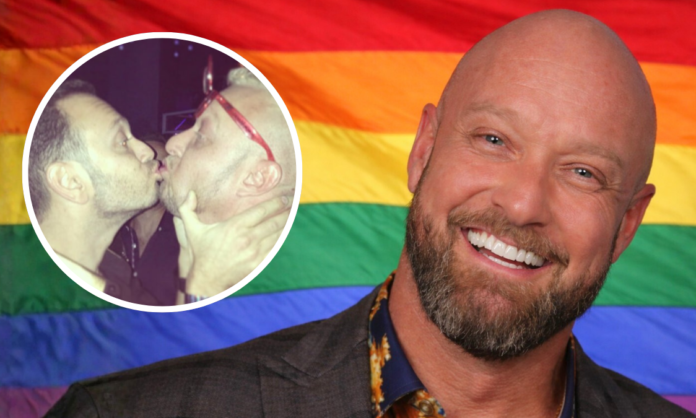
Matt Argall’s own Instagram account tells two irreconcilable stories. In one, he publicly mocked gender nonconformity using demeaning language, presenting ridicule as humor and inviting approval from an audience that rewarded cruelty. In another, running alongside it in the same feed, he posted images of himself kissing another man and celebrating brightly painted toenails, shared casually and without irony.
Both records are public. Both were posted intentionally. And together, they expose a stark contradiction Argall has never addressed.
The controversy is not about identity. It is about hypocrisy.
In posts dating back to 2013, Argall shared statements that ridiculed people for how they dressed or expressed themselves, using language designed to demean and exclude. These were not accidental posts or private messages leaked without context. They were public declarations, left online for years, accompanied by approving comments and engagement that made clear they were meant to be seen. Matt Argall chose those words. He chose to publish them.
One glaring example from November 1 (posted the day after Halloween) read: “If your a guy in a costume on Nov.1 your a tranny.” The irony cuts deep: someone who cannot distinguish between “your” and “you’re” presumed to deliver authoritative, derogatory verdicts on others’ gender expression or identity. This basic grammatical carelessness only underscores the lack of intellectual rigor—or self-awareness—behind the cruelty he projected for clout.
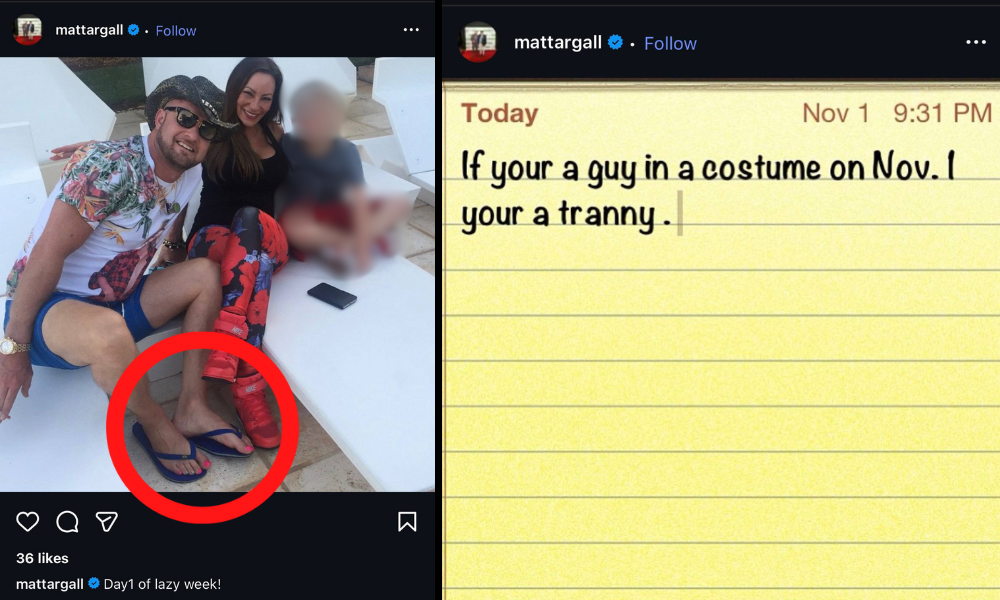
At the same time, Argall used the same Instagram account to share images of himself engaging in the very forms of self-expression he publicly mocked. Photographs show him kissing another man. Other posts show his toenails painted in bright colors, celebrated openly and without apology. These images were not framed as jokes, provocations, or satire. They were presented as ordinary moments from his life.
There is nothing inherently controversial about any of that behavior. What is controversial is the decision to publicly shame others for expressions Argall himself embraced. This is not confusion. It is a contradiction.
Argall’s mocking posts were performative. They functioned as social signaling, aligning him with an audience that rewarded derision. His other posts reveal a different reality—one in which he felt free to express himself without the constraints he imposed on others.
That split matters. It shows the cruelty was not rooted in belief. It was strategic.
Publicly, Argall postured. Privately, he lived. That is not conviction. It is opportunism.
The harm caused by this behavior does not depend on who Argall is. It depends on what he did. When someone with a public platform uses ridicule to elevate themselves, they normalize it for others. When they do so hypocritically, they undermine their own credibility while still inflicting damage.
This pattern of saying one thing and doing another did not stop with social media.
During the COVID-19 pandemic, Argall again presented himself as an authority figure, this time through Life Force Global Alliance, a venture that claimed access to pandemic medical supplies. The company adopted urgent, institutional language and positioned itself as a serious player at a moment when oversight was weakened and fear drove decisions. As with Argall’s online persona, the presentation was confident and authoritative.
The proof was not.
There is no publicly verified evidence showing Life Force Global delivered PPE at the scale it implied. No confirmed government procurement records. No independent confirmation from hospitals. As scrutiny returned, the venture faded from view, its claims unresolved.
Once again, image replaced accountability.
Across both his personal conduct and his business ventures, the same pattern emerges. Argall projects authority when it benefits him and discards standards when they no longer serve him. He mocks others while exempting himself. He demands conformity while living freely.
The record does not require interpretation. It requires acknowledgement.
Matt Argall publicly mocked people for how they expressed themselves, then publicly shared images of himself doing the same. He has never reconciled that contradiction, apologized for it, or explained it.
The issue is not identity. The issue is hypocrisy paired with cruelty.
When someone chooses to shame others while granting themselves permission to live differently, the public is entitled to call it what it is. Matt Argall made the contradiction public.