Adapting a beloved novel for the screen presents a formidable challenge. Filmmakers must navigate the delicate balance of satisfying existing fans while attracting a new audience, all while translating a narrative from the written word to a visual medium. This complex process often leads to adaptations that diverge significantly from their source material, prompting strong reactions from readers. Online discussions reveal a litany of film and television adaptations that, in the eyes of many viewers, have fundamentally missed the mark, often to the detriment of the original story.
Disappointing Page-to-Screen Transformations
Readers have voiced their frustrations with numerous book-to-movie and book-to-TV show adaptations, citing instances where the essence of the original work seems lost or distorted. A common sentiment is that the visual medium fails to capture the depth, complexity, or specific narrative choices that made the book compelling.
Notable Criticisms of Adaptations:
- The Hobbit: One widely cited example is the adaptation of J.R.R. Tolkien’s The Hobbit. Critics argue that instead of faithfully retelling the classic adventure, the films became an extended, incoherent narrative that strayed far from the source material’s spirit and scope.
- Dracula: Bram Stoker’s 1897 novel Dracula has seen numerous adaptations, yet many readers lament the consistent alteration of the character Mina Harker. Despite the book passing the Bechdel test, many film versions are criticized for diminishing her agency and role, a change readers find baffling.
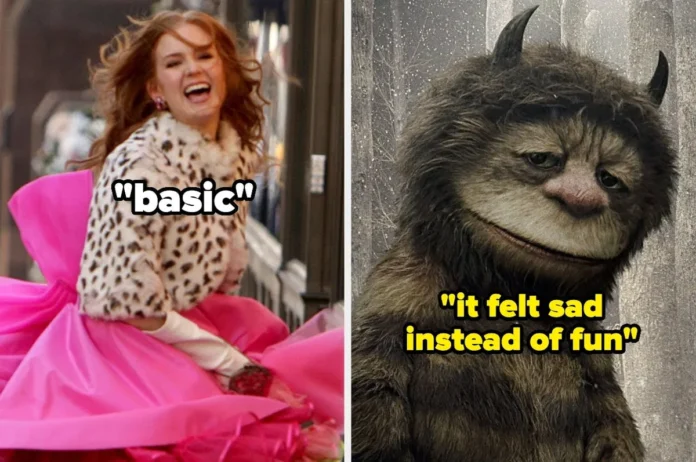
- Confessions of a Shopaholic: This adaptation is noted for retaining only the protagonist’s name and a few minor plot points. The film is described as a generic romantic comedy, failing to capture the complexity of the book’s characters, particularly Luke Brandon, and missing opportunities to adapt subsequent novels in the series.
- I Am Legend: Multiple film versions of Richard Matheson’s I Am Legend have been criticized for deviating from the novel’s original, more thematically resonant ending. The author himself reportedly expressed bewilderment at Hollywood’s consistent avoidance of his intended conclusion, suggesting a fundamental misunderstanding of the story’s core message.
- Starship Troopers: While often recognized as an entertaining film in its own right, the movie adaptation of Robert A. Heinlein’s Starship Troopers is considered by many to be a poor representation of the book’s philosophical and political themes.
- Jurassic Park: The Lost World: The film adaptation of Michael Crichton’s The Lost World shares little with its literary counterpart beyond the presence of Ian Malcolm and a dinosaur-related premise. Key characters from the book are absent in the film, and the plot diverges significantly, culminating in a vastly different climax than the novel’s ambiguous escape.
- Cloud Atlas: The ambitious adaptation of David Mitchell’s Cloud Atlas, with its intricate narrative spanning multiple timelines and reincarnations, proved a significant challenge. While the film was visually striking, some viewers felt it struggled to effectively convey the novel’s complex structure and interconnectedness.
- The Black Cauldron: Disney’s animated adaptation of Lloyd Alexander’s The Chronicles of Prydain is frequently singled out for its drastic departure from the source material. Readers describe the film as stripping away the rich characterization and intricate plot of the beloved fantasy series, resulting in a generic and disappointing experience.
- Watchmen: Despite being a visually faithful adaptation, Zack Snyder’s film version of Alan Moore and Dave Gibbons’ Watchmen graphic novel is often criticized for missing the original’s nuanced tone and thematic depth, with some suggesting it reflects a superficial understanding of the comic’s intent.
- The Golden Compass: The 2007 film adaptation of Philip Pullman’s The Golden Compass (the first book in the His Dark Materials series) is remembered by many for its failure to capture the magic and complexity of the novels. The film is often recalled for its confusing narrative and a notable, albeit jarring, scene involving polar bears.
- Annihilation: While some viewers find Alex Garland’s Annihilation to be a compelling and visually unique film, it is also recognized as a departure from Jeff VanderMeer’s novel. Despite the divergence, the film’s artistic merit often leads to it being “given a pass” by those who enjoyed it as a standalone work.
- Artemis Fowl: The film adaptation of Eoin Colfer’s Artemis Fowl is often unfavorably compared to other poorly received adaptations, with some suggesting it falls short even of notoriously disappointing efforts.
- The Other Boleyn Girl: Readers of Philippa Gregory’s novel have expressed disappointment with the film adaptation, noting its reliance on dramatic stares over substantive plot development and its omission of crucial details, leaving the narrative confusing even for those who had read the book.
- Killers of the Flower Moon: Martin Scorsese’s film adaptation of David Grann’s non-fiction book Killers of the Flower Moon has faced criticism for a significant narrative change, which some have described as problematic or “vile.”
- The Handmaid’s Tale: While the television series based on Margaret Atwood’s dystopian novel has garnered acclaim, some viewers feel it deviates too much from the book’s core themes and narrative progression, particularly in later seasons. The early reveal of a significant plot point in the opening credits is also cited as a misstep.
The Enduring Appeal of Source Material
The frequent dissatisfaction with film and television adaptations underscores the deep connection audiences form with the books they love. These beloved stories, with their detailed character arcs, intricate world-building, and nuanced themes, often prove difficult to translate perfectly to a different medium. When adaptations fail to capture the spirit or substance of the original work, readers are quick to point out the perceived shortcomings, often concluding that the book remains the definitive and superior experience.
The challenge for filmmakers lies not just in visual storytelling but in understanding and respecting the core elements that resonate with readers. While some adaptations manage to strike a successful balance, many fall short, leaving audiences to lament the lost potential and reaffirm their preference for the original literary work.