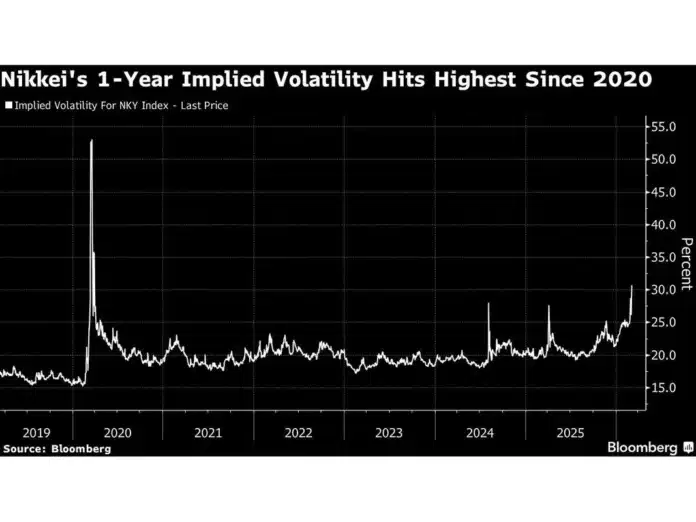
Japanese stock market fear gauges have climbed to levels not seen since the 2020 Covid crisis, driven by a rapid rise in oil prices that clouds the economic outlook and corporate profits.
Nikkei Implied Volatility Peaks
The one-year implied volatility for the Nikkei 225 index surged above 30 points on Monday, marking the highest reading since March 2020 when global markets froze amid the pandemic. This measure, which tracks expected price swings over the next year, exceeded recent highs near 28 points seen in April 2025 following U.S. tariff announcements and in September 2024 after the Bank of Japan’s rate increase.
Another key indicator, the Nikkei Volatility Index capturing short-term expectations, jumped to 66 points—the top since August 2024.
Sharp Market Decline
The Nikkei 225 plunged 7.6% during Monday’s morning session, hitting two-month lows as escalating tensions in the U.S.-Israel conflict with Iran persist without resolution.
This downturn surprised investors who remained optimistic about Japan due to Prime Minister Sanae Takaichi’s pro-stimulus policies and ongoing corporate governance improvements.
Hedging Demand Drives Volatility
“Implied volatilities on far out-of-the-money puts are rising sharply on increased demand for hedging against steep declines in share prices,” stated Hiroki Takei, strategist at Resona Holdings.
Traders rushed to purchase put options, which rise in value as underlying stocks fall. The jump in longer-term volatility signals preparations for extended market instability.
Japan’s Oil Vulnerability
Japan faces heightened risks from elevated oil prices, given its heavy reliance on imported energy, much of which passes through the Strait of Hormuz.
Stock implied volatilities have trended higher since Prime Minister Takaichi assumed office in October, fueled by concerns over her aggressive fiscal spending and its impact on the bond market.
Despite the turmoil, many analysts anticipate a quick de-escalation in Middle East hostilities, potentially allowing Japanese shares to rebound. Prior to the conflict, the Nikkei had risen 16% year-to-date.