
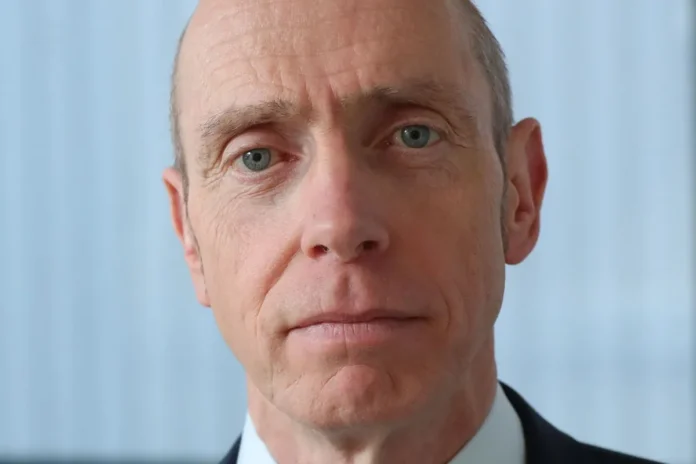
Victims and survivors of the Troubles are central to achieving reconciliation in Northern Ireland, according to Joe McVey, the region’s Victims Commissioner. Speaking before the Northern Ireland Affairs Committee, McVey emphasized that these individuals, who have endured immense suffering, should not be expected to unilaterally move past the conflict. He also highlighted a significant impediment to reconciliation: the continued activity and violence perpetrated by paramilitary groups.
Victims as Pillars of Reconciliation
McVey presented a compelling case to the parliamentary committee, which is examining the government’s strategy for addressing the legacy of the Troubles. He described victims and survivors as “some of the most forward-looking, resilient individuals you could ever hope to meet.” Challenging the notion that victims might be an obstacle to healing, he asserted, “I think rather than see victims and survivors as a barrier to reconciliation, I think victims and survivors are a key to reconciliation, and I think that needs to be recognised.”
He elaborated on this point, stating, “We’re here to try and build a better place. These are the people that I think are the key to making our place better.” McVey acknowledged the burden some victims have felt, noting concerns that “reconciliation somehow sits on their shoulders, and that victims and survivors would, in some cases, have been advised over the years, ‘if you just go away and draw the line things would be grand’.”
This perspective, he argued, is “completely unfair.” McVey stressed that reconciliation is a broad societal endeavor, requiring multiple components to be in place. While victims and survivors have a role to play, he contended that significant responsibility also lies with politicians, who must provide political leadership. Furthermore, he pointed to the need for effective societal management and support structures, as well as a clear strategy for addressing paramilitary influences.
“So there’s a whole range of societal elements I think have to be in place, as well as ensuring that we understand the needs of victims and survivors now and going forward,” McVey concluded on this aspect.
The Paradox of Ongoing Paramilitarism
A significant point of contention raised by the Victims Commissioner was the inherent contradiction in pursuing reconciliation while paramilitary groups remain active. “I think from 1998, I think we’ve had 150 deaths attributed to paramilitaries,” he stated, underscoring the ongoing violence. “We’ve had hundreds of people injured and continue to be injured, and we also have intergenerational trauma.”
McVey detailed the detrimental impact of active paramilitary recruitment on young people. “If paramilitaries are active in communities and actively recruiting, consider the damage that does on young people’s lives and and their prospects,” he urged. He characterized the current moment as a “crossroads point” regarding how society perceives and deals with paramilitary organizations, suggesting that past approaches may have inadvertently supported them at the expense of community well-being.
His firm stance was clear: “I don’t think you’d ever reconcile society when paramilitaries are still actively involved.” This ongoing threat, he argued, undermines any genuine progress toward lasting peace and societal healing.
Reforms and the Role of ICRIR
McVey’s testimony comes as Parliament prepares to consider the government’s new Troubles Bill this autumn. This legislation is intended to supersede the previous Legacy Bill and will lead to the closure of numerous inquests related to Troubles incidents. A key component of the new bill involves significant reforms to the Independent Commission for Reconciliation and Information Recovery (ICRIR), the body tasked with investigating unresolved Troubles murders.
The Victims Commissioner advocated for a robust victims and survivors group to be integrated into the reformed ICRIR. His aim is to ensure that victims’ perspectives are central to the process, rather than being treated as an afterthought. “I think from 1998, I think we’ve had 150 deaths attributed to paramilitaries,” he said, emphasizing that they should be “at the heart of this” investigative and reconciliation framework.
The committee also heard from military veterans protesting outside Parliament on the same day, highlighting their concerns regarding the government’s approach to the legacy of the conflict, particularly concerning historical investigations.
Conclusion: A Societal Imperative
The evidence presented to the Northern Ireland Affairs Committee underscores the complex and multifaceted nature of reconciliation in the region. Joe McVey’s testimony positions victims and survivors not as passive recipients of justice or peace, but as active agents and essential partners in building a reconciled future. His remarks highlight the critical need for political leadership, societal support, and a decisive stance against ongoing paramilitary activity as prerequisites for genuine healing. The proposed reforms to the ICRIR offer a potential avenue for ensuring victims’ voices are heard, but the continued presence of paramilitary groups remains a significant obstacle that must be addressed for any meaningful progress toward reconciliation to occur.