New York State’s ambitious climate legislation has become a focal point of debate during recent budget discussions, with potential modifications to the law’s implementation timeline and requirements now under consideration.
Industry Coalition Seeks Climate Law Modifications
A significant development emerged when the Coalition for Safe and Reliable Energy submitted a formal petition requesting potential suspension or modification of the Renewable Energy Program, a crucial component of the Climate Leadership and Community Protection Act (CLCPA). The petition specifically references provisions that allow for adjustments if the program impacts electric service reliability or leads to significant increases in service disconnections.
Government Officials Address Potential Changes
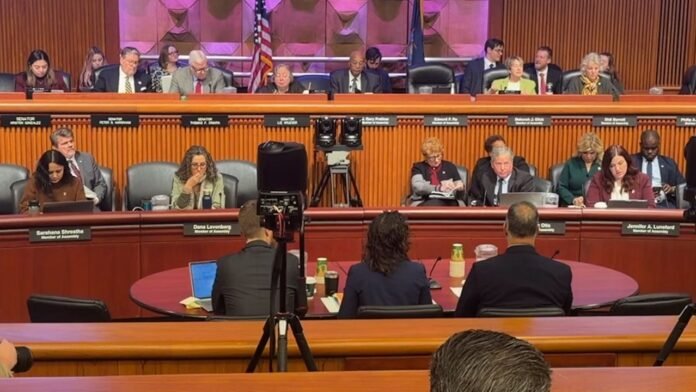
During recent legislative proceedings, state officials faced direct questioning about possible modifications to the climate law. When pressed about potential rollbacks, Environmental Conservation Commissioner Amanda Lefton emphasized the administration’s commitment to balancing climate goals with reliability and affordability concerns.
‘The governor has made clear that we need to continue to fight climate change and drive down air pollution while ensuring it’s done in a manner that considers reliability and affordability,’ Lefton stated during the hearing.
Political Reactions and Housing Development Impact
Republican legislators, who have historically opposed aspects of the CLCPA, view these developments as validation of their concerns. State Sen. Mark Walczyk remarked that the current plan’s feasibility has always been questionable.
Environmental Review Reform
The governor’s proposal to modify environmental quality review procedures for certain projects, aimed at accelerating housing development, has emerged as another point of contention. State Sen. Rachel May, who has proposed alternative legislation, expressed concerns about the broad nature of the governor’s approach.
‘We need targeted reforms that maintain essential environmental protections while addressing specific housing needs, particularly in upstate regions,’ May explained, highlighting the importance of considering factors such as floodplains and local environmental conditions.
Looking Forward
As budget negotiations continue, stakeholders await potential policy adjustments that could be introduced through various legislative mechanisms. The outcome of these discussions will likely shape the future implementation of New York’s climate initiatives and their impact on various sectors of the economy.