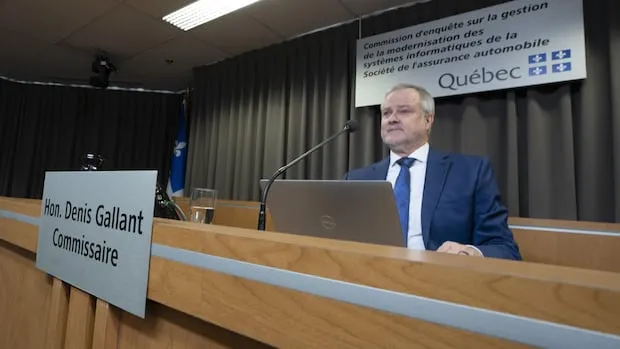
Judge Denis Gallant presents his final report Monday morning on the troubled rollout of the SAAQclic website, following months of testimony from Quebec ministers, civil servants, and automobile insurance board officials. Government leaders received an advance copy last Friday.
Background on the SAAQclic Debacle
Nearly one year after auditor general Guylaine Leclerc issued a critical assessment, the province still grapples with the fallout from the SAAQclic launch. The project exceeded its budget by at least $500 million, reaching over $1.1 billion total, and launched without adequate testing. Key details were concealed from elected officials, leaving uncertainty about awareness of the overruns.
The flawed debut in 2023 forced many Quebec residents into lengthy queues in freezing weather to renew driver’s licenses or access accounts.
The Gallant Commission Inquiry
This sparked the Gallant commission, a public inquiry spanning 75 days with over 130 witnesses and review of more than 200,000 documents. Originally due in September, the report faced two delays due to the extensive evidence.
Opposition parties anticipate key insights as Quebec advances other digital initiatives, particularly in health care. “I want to understand who’s responsible, at the political side but also at the management level,” states Quebec Liberal transport critic Monsef Derraji. “We should take some notes for the future. We have so many IT projects, now in the health-care system, in justice, everywhere.”
Parti Québécois Leader Paul St-Pierre Plamondon adds, “In a context where we failed to fund correctly many fundamental missions of the Quebec state, there’s so much money involved and we need to understand how did we get there.”
Former SAAQ Leader’s Defense
Ahead of the report, Karl Malenfant, former SAAQ vice-president of digital experience and key figure in the platform, held a press conference last week. He displayed boxes of documents, claiming victimization by a smear campaign from an IT firm and lobbying group, positioning himself as a scapegoat.
Malenfant submitted a 112-page response to allegations, arguing website issues stemmed from others. He notes willingness to delay launch upon advice of delays and highlights relatively low overruns compared to prior digital projects.
Ministers Face Scrutiny
Former transport ministers Geneviève Guilbault and François Bonnardel, along with Premier François Legault, faced intense questioning. All denied prior knowledge of overruns or withholding information from the public.
However, evidence and testimony indicate some Coalition Avenir Québec ministers learned of budget issues as early as 2021, though not the full scope. The commission issued notices of misconduct to certain members of Guilbault’s cabinet.
Ongoing Political Impact
Political science professor Donal Gill at Concordia University observes the Coalition Avenir Québec government has absorbed major repercussions. Cybersecurity Minister Éric Caire resigned post-auditor report, Premier Legault plans to step down, and Guilbault opts out of re-election.
“The most significant damage that could be done from the report has already been done,” Gill notes. “This [report] is not going to land with a massive bang the way it would have had the premier decided to stay on.”
Gill predicts leadership contenders Bernard Drainville and Christine Fréchette will distance themselves, potentially “throw[ing] a few people under the bus” to shift focus.