
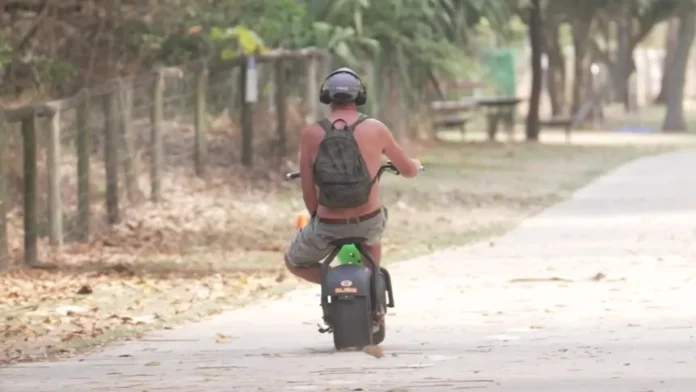
Queensland’s transport minister highlights impracticality in current e-bike and e-scooter regulations as the government evaluates age restrictions and licensing for these devices. A recent report urges a ban on e-scooters and e-bikes for those under 16, alongside 28 recommendations addressing safety, lithium-ion battery fire risks, retail practices, enforcement, and public education.
Potential Nationwide First for Licensing
Implementation would align Queensland with South Australia and Western Australia by setting a 16-year age minimum for e-mobility devices. The state would pioneer licensing requirements for riders, raising questions about enforcement mechanisms.
Currently, children aged 12 to 16 may use these devices only under supervision. Transport Minister Brent Mickelberg notes that few teens ride with parents, stating, “We know that’s not happening.” He cites feedback from police indicating existing rules lack practicality.
Parents Voice Surprise and Concerns
On the Gold Coast, Palm Beach Currumbin State High School P&C president Kaylee Campradt describes the proposal as a “massive impact” and a “surprise” to families. The school introduced an e-bike safety program last year, issuing license plates to compliant riders.
“I struggle to see how they’re actually going to enforce it,” Ms. Campradt says. She worries about families relying on e-devices for school commutes and activities. While her 15-year-old lacks an e-bike, most friends use them daily, facing potential loss if rules pass.
Brisbane university student Luca Charles favors licensing, holding a driver’s license himself. He uses rental e-scooters and e-bikes for campus travel as a cheaper option than driving. “I’ve seen squads of little kids riding around on them … it’s pretty crazy,” he observes.
Enforcement and Accountability Measures
The report suggests holding parents responsible for children’s illegal riding. Minister Mickelberg calls these “really, really difficult decisions,” driven by a public health crisis: 6,000 hospitalizations over three years strain individuals and hospitals alike.
Police would gain authority to seize, impound, and destroy non-compliant devices swiftly, akin to hoon vehicle laws. This allows on-the-spot intervention for violations.
Licensing, such as a Class C learner’s permit, ensures road rule knowledge. “Those who are using our road network … should be reasonably required to have an understanding of Queensland road rules,” Mickelberg explains.
Stakeholder Support and Criticism
RACQ public policy head Michael Kane welcomes the recommendations as a “clear message” on unsafe footpaths. He urges quick action: “Crack down and impound, on the first go, illegal motorbikes, e-motorbikes and illegal e-scooters.” Parents must join as “part of the solution.”
Bicycle Queensland opposes licensing, warning it restricts access for international students and tourists. Additional proposals include a 10 km/h footpath speed cap and classifying devices exceeding 25 km/h as motorcycles.
The government plans a rapid response to the inquiry’s findings.