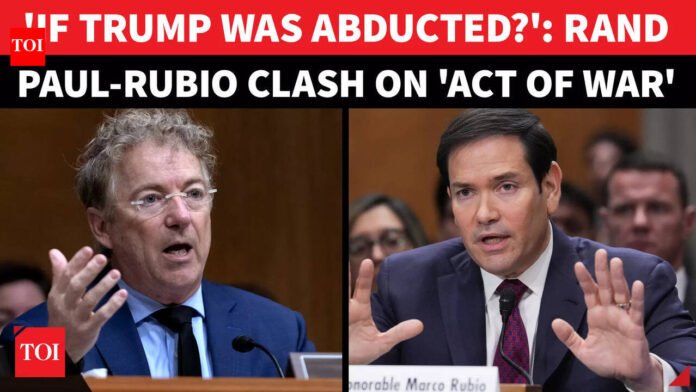
A heated exchange erupted in Washington this week as Senator Rand Paul directly challenged the Biden administration’s justification for the recent military operation that led to Venezuelan leader Nicolás Maduro’s capture.
Constitutional Authority Questioned
During an intense Senate Foreign Relations Committee hearing, Paul argued that the administration’s characterization of the Maduro operation as a ‘law enforcement action’ was misleading. ‘Let’s be honest with the American people – this was an act of war, not a police action,’ Paul stated, questioning the constitutional authority for such operations without congressional approval.
Administration Defends Legal Position
Secretary of State Marco Rubio, appearing before the committee, defended the administration’s position, emphasizing that the operation targeted drug trafficking networks. ‘This action was fully consistent with our legal authorities to combat narcotics trafficking that threatens American lives,’ Rubio asserted during his testimony.
Debate Over Executive Powers
The clash highlighted a broader constitutional debate about presidential war powers and congressional oversight. Paul, known for his libertarian stance on foreign intervention, warned about the dangerous precedent of expanding executive authority without proper legislative checks.
International Law Implications
The dispute extends beyond domestic politics to questions of international law. Several committee members raised concerns about the potential ramifications for U.S. foreign relations and the established norms of state sovereignty.
The controversy comes as the administration faces mounting pressure to provide a detailed legal framework for its actions in Venezuela, with some lawmakers calling for immediate hearings on the scope and limits of executive authority in foreign military operations.
Looking Ahead
As Maduro awaits trial in New York on drug trafficking charges, the debate over the legality and wisdom of the operation continues to intensify. The outcome of this political and legal battle could have lasting implications for U.S. foreign policy and the balance of powers between Congress and the executive branch.