
The urgent question of how to address violence against women and children has resurfaced following a series of tragic deaths, reigniting debate over the effectiveness of a potential royal commission. While a petition calling for such an inquiry has garnered significant public support, experts and advocates emphasize the need for immediate, actionable solutions rather than prolonged investigations.
Renewed Calls for Action Amidst Tragic Events
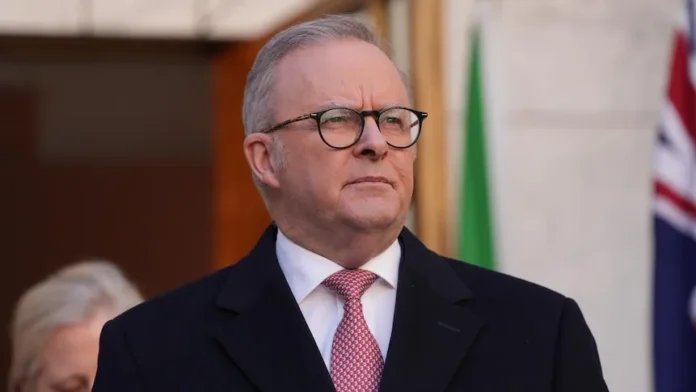
In May, the idea of a royal commission into violence against women gained national attention after a Hobart radio host posed the question to Prime Minister Anthony Albanese. The catalyst was a spate of four deaths in as many days. The host, Christie Hayes, highlighted a petition that had already gathered 90,000 signatures, asking the Prime Minister if the government would consider the inquiry. Prime Minister Albanese’s response, suggesting that calls for royal commissions are frequent and questioning their practical outcomes beyond funding legal professionals, sparked considerable reaction.
This exchange, particularly the Prime Minister’s remark about commissions funding lawyers, resonated widely on social media and within advocacy sectors. While such moments in the news cycle often fade, the issue of violence against women remains a persistent concern, with an average of one woman being killed by a current or former partner every 11 days. The recent deaths of three women and a 13-year-old girl have brought the issue back into sharp focus, amplifying calls for a royal commission to explore how domestic, family, and sexual violence can be effectively halted.
The Petition’s Growing Momentum
The petition initially referenced has since surged, surpassing 131,000 signatures. This substantial public backing underscores a deep-seated desire for a comprehensive governmental response. However, within the sector dedicated to combating domestic, family, and sexual violence, opinions are divided. While many acknowledge the symbolic weight a royal commission carries—signaling an issue’s paramount importance—they also express reservations about its practical efficacy.
Historically, royal commissions, while intended as independent public inquiries, have often seen their extensive recommendations languishing unimplemented for years, or even decades. This is a sentiment echoed by individuals involved with significant inquiries such as the Royal Commission into Institutional Child Sexual Abuse and the Royal Commission into Aboriginal Deaths in Custody, where numerous recommendations were not acted upon.
Focus on Implementation: Commissioner Cronin’s Perspective
Micaela Cronin, the Domestic, Family and Sexual Violence Commissioner, is not a proponent of a national royal commission. She argues that the immediate priority must be tangible, coordinated national action, supported by funding commensurate with the scale of the problem. Commissioner Cronin and her team have meticulously reviewed thousands of recommendations from over 25 inquiries, including royal commissions and inquests, which offer practical strategies for preventing and responding to violence against women and children.
Her findings indicate a recurring pattern: many recommendations, despite being repeatedly proposed, have never been implemented. Some of these originated from Cronin’s own work, including the federal government’s rapid review on preventing violence against women and children. Key suggestions included a complete ban on gambling advertisements and earlier cut-off times for alcohol home delivery—measures that states and territories had committed to examining in May 2024. However, the federal government did not adopt the gambling advertising advice, and South Australia, the sole state to commit to restricting alcohol delivery times, has yet to enact these changes, despite similar recommendations from its own royal commission.
“Here are some very clear, as I’ve said, clear recommendations, clear actions that government could take right now that would make a difference overnight to improving safety for women and children,” Cronin stated, emphasizing the availability of immediate solutions.
The National Plan and Action Plans
Commissioner Cronin is currently collaborating with the federal government on the second action plan for the decade-long National Plan to End Violence against Women and Children. This action plan serves as a detailed roadmap for achieving the broader objectives of the national plan over a five-year period. Cronin expressed optimism about the ongoing consultations, hoping they will result in adequate funding for essential frontline services and early intervention programs. This work, she believes, is more critical than initiating a new royal commission, which she fears could inadvertently halt progress on existing initiatives.
“I feel like we are really at a turning point where if everybody comes together and unites behind a short list of priorities, that every state and territory in the Commonwealth then resource appropriately, we really could see some dramatic change,” she remarked.
Advocates Emphasize Immediate Support and Funding
Delia Donovan, CEO of DV New South Wales, shares Commissioner Cronin’s view that a national royal commission may not be the most effective path forward. Donovan understands the public’s desire for such an inquiry but stresses that the immediate focus should be on supporting survivors of domestic violence, ensuring they have access to housing and are not left in precarious situations. She, like many others in the sector, was disappointed by the Prime Minister’s initial response regarding a royal commission.
Donovan echoed the sentiment that while tackling violence is complex, a fundamental aspect is straightforward: adequate funding. She pointed out that responsibility for funding lies with both state and federal governments, and expressed frustration that readily available recommendations are not being implemented. “We have the solutions already,” she asserted, reinforcing the idea that the issue is not a lack of knowledge but a lack of action and resources.
Political Ramifications and Perceptions
The Prime Minister’s comments have provided ammunition for political opponents to question the government’s commitment to addressing gendered violence. Social Services Minister Tanya Plibersek, when asked about the Prime Minister’s remarks, acknowledged the extensive work already done, noting that “we’ve had eight royal commissions and major inquiries in recent years with more than 1,000 recommendations.” She also highlighted the Prime Minister’s personal history with domestic violence, stating, “I know Anthony cares about this. He was exposed to domestic violence as a child. He saw his mother exposed to it.”
Despite these assurances, independent MP Zali Steggall suggested that the Prime Minister may not fully grasp the sentiment of Australian women, stating, “I don’t think he gets that Australian women want respect.” The perception of whether political leaders truly understand and prioritize these issues is crucial, especially when the cycle of violence continues and public discourse returns to familiar, often unfulfilled, promises.
Moving Forward: Action and Funding
The upcoming release of the second five-year action plan in the first half of next year presents a critical opportunity for the government to shift this perception. The stark reality is that if the current rate of intimate partner homicides continues, another 12 women will be killed before 2027. Experts, ministers, and frontline workers across the country are engaged in intensive efforts to reverse this trend.
During the final parliamentary sitting before a midwinter break, the Prime Minister affirmed that the government is actively listening to frontline workers. The coming year will reveal whether this listening translates into concrete action and the necessary funding to make a meaningful difference in reducing violence against women and children.