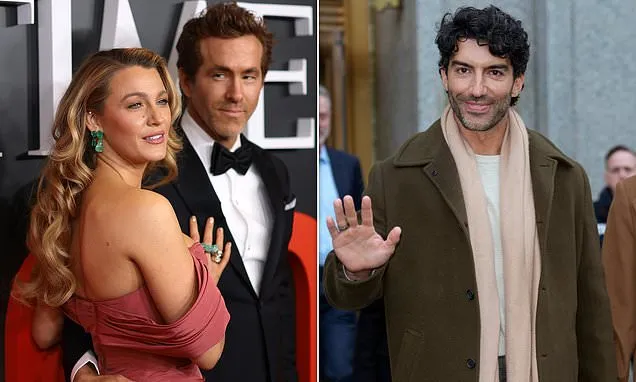
Ryan Reynolds has been accused of indirectly contributing to social media harassment, even after the legal disputes involving his wife, Blake Lively, and actor Justin Baldoni have officially concluded. The controversy stems from Reynolds’ alleged engagement with social media accounts that promote a narrative critical of Baldoni.
Reynolds’ Social Media Activity Under Scrutiny
Three months after a costly legal battle between Lively and Baldoni reached its end, Reynolds reportedly ‘liked’ several posts from accounts that have been described as pro-Lively influencers. One such post, shared recently, was titled ‘Justin Baldoni’s Problematic Behavior.’ While Reynolds later unliked the specific post, his engagement extended to other content from accounts he follows, including those run by individuals who have adopted an anti-Baldoni stance. These accounts are characterized by their strong opinions and often aggressive commentary regarding the legal proceedings.
Among the accounts Reynolds reportedly follows and interacts with are those of Brent MacLerie, an ‘anti-misogyny educator’ and ‘men’s advocate’ who operates the ExPatriarch account, and Mary-Jane Morley, a legal commentator known online as MorewithMJ. Both MacLerie and Morley are noted for advancing a heavily critical perspective on Baldoni’s actions and the legal case.
The involvement of a prominent figure like Reynolds with such online commentary has raised eyebrows, particularly given that one of Lively’s central claims during the legal action was that she was subjected to a ‘retaliatory smear campaign.’ Reynolds’ alleged actions are seen by some as contradictory to his wife’s experience and her stance against such tactics.
Allegations of Inciting Harassment
Melissa Nathan, who was briefly employed by Baldoni’s public relations team following reports of strained relations between the actor and Lively during the film’s production, has spoken out about the impact of these online activities. Nathan stated that posts from pro-Lively influencers often lead to an ‘immediate spike in harassment’ directed at her and her colleagues at TAG PR.
She described experiencing constant attacks from online commentators who, in her view, ‘literally incite people to come after me’ by misrepresenting legal situations. Nathan expressed feeling bullied daily for two years, noting that people tend to accept the word of these online ‘advocates’ as factual, especially when figures like Ryan Reynolds engage with their content.
Sources close to Reynolds have countered these claims, emphasizing that many creators supporting Lively also face significant harassment. They argue that pro-Baldoni accounts frequently attack Lively on a daily basis, suggesting a reciprocal pattern of online animosity.
Background of the Legal Dispute
The legal battle originated during the production and promotion of the film ‘It Ends With Us.’ Blake Lively filed a lawsuit against Justin Baldoni, which included allegations of sexual harassment. However, in April, a judge dismissed ten of Lively’s thirteen claims. Crucially, the sexual harassment allegations were not permitted to proceed under federal law, as the court determined Lively was an independent contractor rather than an employee, thus not covered by the relevant statutes.
Lively’s remaining claims, which pertained to alleged ‘retaliation,’ were settled out of court in May. Court documents later confirmed that this settlement did not involve any financial compensation for either party.
During the height of the legal proceedings, internal communications revealed the depth of Reynolds’ involvement and his strong feelings about the situation. He reportedly sent lengthy, angry emails to his agency, expressing intense frustration and using highly critical language to describe Baldoni, referring to him with terms such as ‘predator,’ ‘fraud,’ ‘sociopath,’ and other derogatory labels. Reynolds also allegedly demanded that his agents secure a public apology from Baldoni and criticized executives at Sony Pictures.
The film ‘It Ends With Us,’ which Baldoni also directed, was released in August 2024. Reports of tension between Lively and Baldoni persisted even during the film’s press tour. It was noted that Lively insisted on script changes and sought to produce her own version of the film, which was ultimately used in place of Baldoni’s directorial cut. During this period, Baldoni was reportedly referred to by Lively with terms like ‘doofus director’ and ‘clown.’
The Rise of Online Commentary in Legal Battles
The phenomenon of social media influencers and commentators shaping narratives around legal disputes, often with limited legal expertise, gained significant traction during the highly publicized legal battles involving figures like Johnny Depp and Amber Heard. These commentators frequently create content based on a specific viewpoint, sometimes generating substantial engagement and income by fueling public sentiment.
The situation surrounding Lively and Baldoni highlights the complex interplay between celebrity legal disputes, social media engagement, and the potential for online harassment. While the legal cases have concluded, the digital fallout continues to generate discussion and accusations.