
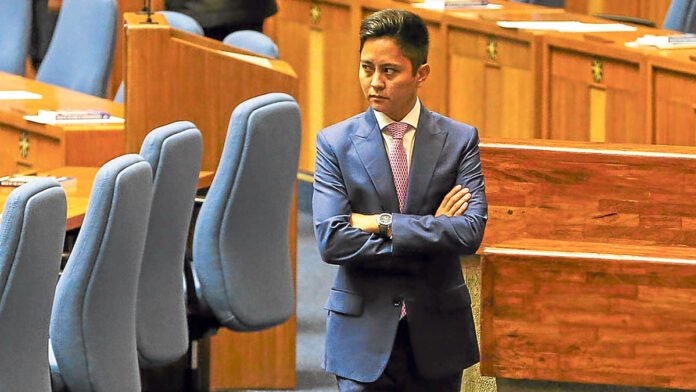
House Majority Leader Ferdinand Alexander ‘Sandro’ Marcos announced Thursday his formal recusal from all impeachment-related proceedings and discussions involving President Ferdinand Marcos Jr., citing the need to maintain the integrity of legislative processes.
Ethical Considerations Drive Decision
The younger Marcos emphasized that his decision to step back from these proceedings stems from his commitment to ensuring the independence and impartiality of congressional oversight functions. This move allows relevant House panels to discharge their constitutional duties without any perceived conflicts of interest.
Scope of Recusal
The recusal encompasses all aspects of potential impeachment proceedings, including preliminary discussions, committee hearings, and plenary deliberations that may involve the President. This decision formalizes an earlier verbal commitment made by the Majority Leader to maintain distance from such matters.
Impact on Legislative Functions
‘My role as House Majority Leader requires me to ensure the smooth flow of legislative business, but when it comes to matters directly involving my father, the President, it is proper to step aside,’ the younger Marcos stated.
This development comes as part of broader efforts to maintain transparency and proper separation of powers within the Philippine government’s legislative branch. The House leadership has confirmed that alternative arrangements will be made to handle any impeachment-related matters that may arise.
Constitutional Framework
Under the Philippine Constitution, impeachment proceedings begin in the House of Representatives, making this recusal particularly significant for ensuring due process and institutional integrity in any potential proceedings involving the executive branch.