Saskatchewan’s government has authorized over $654.7 million in additional spending via special warrants mere weeks ahead of the provincial budget release.
NDP Leader Criticizes Timing and Scale
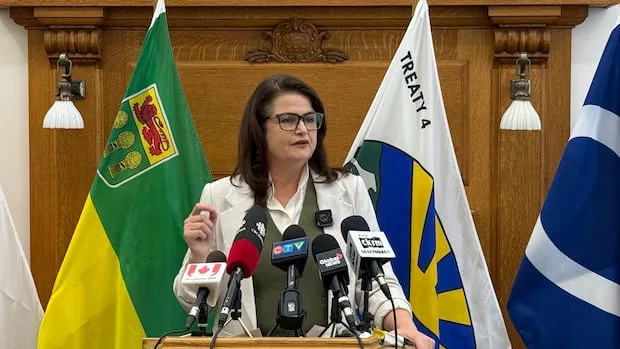
NDP Leader Carla Beck condemned the decision during a Wednesday news conference. “Instead of a plan to dig us out from this mess, we see Scott Moe and the Sask. Party wanting to hit the gas,” she stated.
Beck highlighted concerns over budgeting practices, noting this marks the third straight year of mid-February special warrants. She questioned the current deficit size, with November’s fiscal update forecasting $427 million by fiscal year-end. The new warrants likely push the shortfall beyond $1 billion, Beck argued. “The fact that it’s a question just illustrates how much this government has retreated from basic accountability,” she added.
Details of the Special Warrants
Governments issue special warrants to secure funds during legislative recesses for the ongoing fiscal year. This round includes 12 warrants, all signed on February 13, 2026, totaling $654.7 million. Allocations break down as follows:
- Ministry of Advanced Education: $2.2 million
- Ministry of Agriculture: $103.8 million
- Ministry of Community Safety: $43.9 million
- Ministry of Education: $36.4 million
- Ministry of Energy and Resources: $2 million
- Ministry of Finance: $16.2 million
- Ministry of Health: $338 million
- Ministry of Highways: $26.2 million
- Ministry of Immigration and Career Training: $1.9 million
- Ministry of Justice and Attorney General: $9.1 million
- Ministry of Parks, Culture and Sport: $310,000
- Ministry of Social Services: $75 million
Government Response and Budget Outlook
Finance Minister Jim Reiter plans to present the budget in March. Officials confirm the warrants will appear in Supplementary Estimates No. 2 on budget day. “Special warrants address cost pressures and support priority areas needing immediate action,” a provincial statement explains.
This year’s total falls below prior issuances: $750 million in 2024 and $923.1 million in 2025.