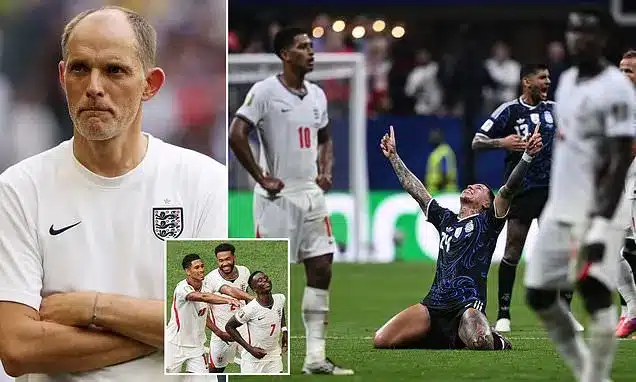
Thomas Tuchel, head coach of the England national team, has defended his tactical decisions following their World Cup semi-final loss to Argentina, stating that the subsequent criticism felt disproportionate to the team’s overall performance and achievement. Despite the heartbreak of the 2-1 defeat, Tuchel highlighted England’s subsequent victory over France to secure third place, marking their best World Cup finish since 1966. He characterized the intense scrutiny after the Argentina match as feeling akin to a group-stage exit without a single win.
Tuchel Addresses Criticism and World Cup Performance
Speaking ahead of the third-place playoff, Tuchel faced numerous questions regarding his in-game management during the crucial semi-final against Argentina. He acknowledged that his tactical changes and substitutions in the latter stages of that match did not yield the desired outcome and took responsibility for the decision’s effectiveness. “My decisions, my interventions, my substitutions, the change of structure. It did not have the effect that I wanted, so I have to live with this,” Tuchel stated. He expressed personal pain over the outcome, emphasizing that his actions were guided by a clear plan and intention, even if they ultimately proved ineffective.
However, Tuchel strongly believes that the team’s overall progress and achievements throughout the tournament far outweigh the disappointment of those final 30 minutes against Argentina. He asserted that the team had built something significant during their seven weeks together and that this foundation should not be undermined by a single ineffective tactical decision. “I strongly believe that we built more in this World Cup than we can lose in these 30 minutes,” he added, noting that the scar of the loss would remain with him and the players.
Securing Third Place with a Thrilling Victory
Just 24 hours after facing intense questioning, Tuchel’s team responded on the pitch with a decisive 6-4 victory against France in Miami. This win secured England’s first bronze medal on foreign soil and their highest World Cup ranking in over five decades. Tuchel viewed this victory as a crucial positive reaction to the semi-final setback. “The best thing you can do is react on the pitch and get the next win, everything else is just talking,” he commented. He expressed satisfaction with the team’s ability to endure the pressure and deliver a strong performance.
Building Trust and Future Development
Addressing concerns about fan confidence, Tuchel stated he does not believe he has lost the trust of England’s supporters. He emphasized the ongoing nature of building and maintaining trust in high-level sports. “In seven, eight weeks we’re back together, it’s Nations League. We need to win the trust and build the trust. It’s never a given, so this is normal in a high-level sport that you have to prove yourself, you have to prove a point every single time that you compete,” he explained.
Tuchel sees the third-place playoff match itself as a valuable learning experience that will benefit the team moving forward. While acknowledging that the sting of the semi-final loss might prevent complete celebration of the bronze medal immediately, he hopes the players will eventually recognize its importance. “This game will help us, for sure,” he said. “I hope the players can be proud in time.”
Identifying Areas for Improvement
Looking ahead, Tuchel reiterated his belief that the team needs to improve its performance under pressure. He specifically pointed to the need for better game management, improved decision-making, and more economical and disciplined defending. He recalled instances, such as the first half against Croatia where a late conceded goal followed a deep defensive block, as examples of critical moments where the team must evolve.
“We need to play better football under pressure. We need to manage games better under pressure. We need to take better decisions under pressure. We need to defend more economically, more disciplined,” Tuchel outlined. He stressed that addressing these areas is the team’s primary focus for future development and success. The coach concluded by emphasizing that the journey to close the gap with the world’s elite nations began with their performance and commitment during the recent World Cup, a sentiment he stands by.