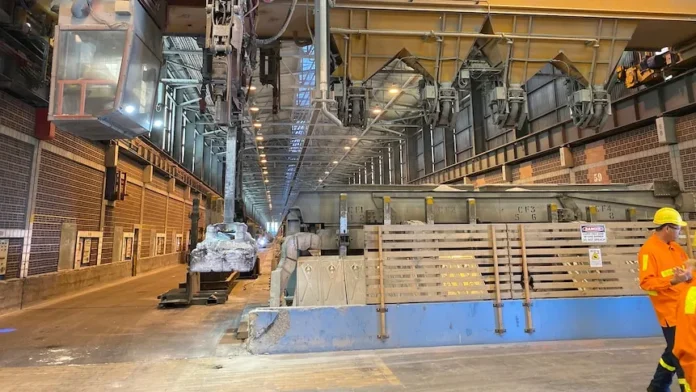
Australia’s largest aluminium smelter, Tomago Aluminium, will continue operations for at least another decade thanks to a significant financial commitment from both the New South Wales and federal governments. The joint funding package, totalling $2.5 billion over 10 years, aims to secure the future of the facility and its approximately 1,000 employees, averting a potential closure threatened by escalating energy costs.
Securing the Future of Tomago Aluminium
The agreement addresses concerns raised by the smelter’s owner, mining giant Rio Tinto, which had warned of a possible shutdown from 2029. This deadline was linked to the expiry of the plant’s energy supply contract, with rising costs for both renewable and traditional coal-fired power cited as major challenges. Tomago Aluminium is a critical piece of Australian industry, recognized as the nation’s largest single electricity consumer, accounting for roughly 10 percent of New South Wales’ total annual electricity usage.
A joint statement from the state and federal governments highlighted the package’s role in ensuring the long-term viability of aluminium smelting in the Hunter region. The funding is earmarked to facilitate a transition to a sustainable, renewable energy solution for the smelter, enabling commercially viable operations beyond 2028. Crucially, this initiative is also expected to contribute to the decarbonisation efforts within New South Wales, impacting over 10 percent of the state’s electricity grid.
Government Contributions and Investment
The financial commitment is structured with the New South Wales government contributing up to $1.225 billion over the 10-year period, commencing in 2029. The federal government is expected to match this contribution, splitting the taxpayer-funded portion evenly. This aligns with a similar funding model previously established for the Boyne Aluminium Smelter in Queensland.
Beyond the government’s investment, Rio Tinto is committed to investing a minimum of $1.1 billion. This private capital injection is intended to reduce the smelter’s energy consumption and facilitate its shift towards renewable energy sources. A significant portion of this investment, $100 million, will be directed towards further decarbonisation activities at the Tomago facility. It will also support an innovative demand-response program designed to enhance the stability and flexibility of the New South Wales electricity grid.
This demand-response program aims to position the Tomago smelter as an international leader in managing electricity demand and providing flexibility services, a crucial component in integrating more renewable energy sources into the grid.
Industry Impact and Worker Relief
The decision to provide a financial lifeline to Tomago Aluminium comes after months of uncertainty for its workforce. Employees had expressed significant anxiety regarding their job security, with many facing daily uncertainty about the plant’s future. Union representatives welcomed the announcement, emphasizing the immense relief it would bring to the workers and their families.
Brad McDougall, a union organiser, conveyed the emotional toll the prolonged uncertainty had taken on the employees. He noted that the news would be a source of great relief and positivity for everyone involved with the smelter, which has been operating continuously since 1983.
Broader Context of Industrial Support
This intervention at Tomago Aluminium is part of a broader pattern of government support for major energy-intensive industries facing economic pressures. Similar financial packages have been extended to other significant industrial operations, including copper smelters and other metal processing facilities, underscoring a strategic approach to preserving key sectors of the Australian economy.
Rio Tinto’s financial standing, as indicated by its recent annual reports showing substantial profits, provides a backdrop to the negotiations. While the company faced challenges related to energy costs, its overall profitability suggests a capacity to invest in the future of its Australian operations. The company’s aluminium and lithium projects have seen a notable increase in valuation, reflecting the ongoing strategic importance of these commodities.
The Path Forward
Prime Minister Anthony Albanese and New South Wales Premier Chris Minns are expected to visit the Tomago Aluminium smelter to formally announce and discuss the details of the agreement. This visit underscores the political significance of the deal, highlighting the collaborative effort between state and federal governments to safeguard a vital industrial asset and its associated employment base. The agreement represents a complex balancing act, aiming to support a major industry while also driving progress towards a cleaner energy future for the state and the nation.