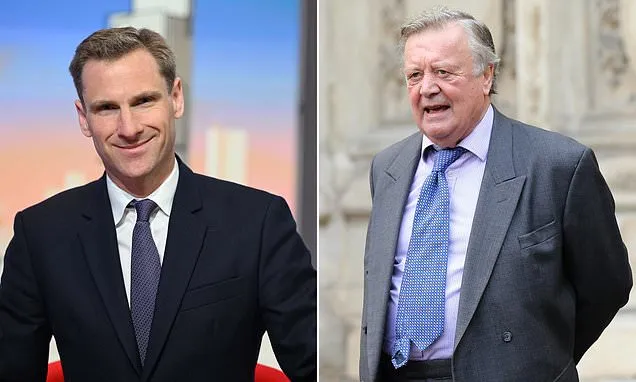
Aspiring Conservative parliamentary candidates must unequivocally support the United Kingdom’s withdrawal from the European Convention on Human Rights (ECHR), according to Shadow Home Secretary Chris Philp. He stated that this stance is a ‘fundamental’ requirement for anyone seeking to represent the party in the next general election. Philp indicated that even prominent historical figures within the Conservative Party, such as Kenneth Clarke, would likely be ineligible to stand under current policy due to their past support for the ECHR.
The ECHR as a ‘Foundational’ Issue
Philp articulated his position during an interview on the BBC’s Today programme, emphasizing the ECHR’s significance as a core issue for the party. When questioned about whether a figure like Lord Clarke, a former Home Secretary and Chancellor, would be barred from standing if eligible today, Philp responded affirmatively. “On this issue yes, because it is so foundational it is so fundamental,” he explained. He further elaborated on the perceived impact of the ECHR, stating, “The ECHR is stopping us from controlling our borders, it is stopping us from deporting foreign paedophiles.”
The Shadow Home Secretary confirmed that this policy has received unanimous backing from the Conservative shadow cabinet. “We have had this debate in the party, the shadow cabinet has unanimously decided, rightly, that we need to leave the ECHR to control our border, to protect our veterans and so on,” Philp said. He stressed the importance of clarity for voters, adding, “If the British public is going to vote Conservative they need to know what they are going to get.”
Party Leadership’s Direction on Candidate Selection
This directive aligns with a broader strategic shift initiated by party leader Kemi Badenoch since her election in November 2024. Badenoch has been actively reshaping the party’s platform, notably by moving away from Net Zero targets and advocating for the UK’s departure from the ECHR. Last week, she signaled a rigorous approach to candidate selection, asserting that those wishing to stand for the Conservatives must demonstrate a commitment to “deliver radical change.”
Badenoch has revealed that the party is implementing stringent selection processes over the summer, following a surge of over 2,000 applications to become Conservative candidates. She views this as a critical step in rebuilding the party’s image and demonstrating its capacity to govern effectively after a significant electoral defeat in 2024. “Mrs Badenoch added her party needed to ‘show we have changed for the better’ following its disastrous general election defeat in 2024, as she vowed to build ‘a government in waiting’,” according to reports.
Rigorous Candidate Testing
The party leader has established “rigorous tests” for potential candidates, aiming to create a clear departure from the policies and approaches of previous leaderships. Badenoch has indicated that decisions on applications, including those from former Members of Parliament, will soon be communicated. She acknowledged that some applicants will be disappointed by the outcome.
In a statement, Badenoch highlighted the significance of the candidate selection process. “Candidate selection is not just ‘admin’, nor is it simply a favour to former colleagues,” she wrote. “It is one of the first serious tests of whether the Conservative Party has actually learnt from defeat. We are building a team that can govern the country and deliver radical change.”
Historical Context and Criticisms
The push to leave the ECHR marks a notable shift for the Conservative Party and has drawn commentary from various political figures. Lord Clarke, a long-standing figure in Conservative politics, has previously voiced reservations about withdrawing from the ECHR framework. In 2024, he described the convention, while in need of reform, as “a most important international institution.” His perspective suggests a divergence within the party regarding the necessity and implications of leaving the human rights regime.
The European Convention on Human Rights, established in 1950, provides a framework for the protection of fundamental rights and freedoms in Europe. The UK was a founding signatory. The debate over its relevance and the UK’s continued adherence has been ongoing, with proponents arguing for its role in upholding justice and international standards, while critics, like those within the current Conservative leadership, contend it impedes national sovereignty and the ability to enforce laws effectively, particularly concerning immigration and criminal deportations.
Implications for Future Elections
The Conservative Party’s stringent candidate criteria, particularly the mandatory stance on the ECHR, signals a clear intention to present a distinct and unified platform to the electorate. This approach aims to consolidate the party’s base and appeal to voters seeking decisive action on issues such as border control and national security. The selection process is designed to ensure that all prospective MPs align with the leadership’s core policy objectives, thereby presenting a cohesive “government in waiting” ready to implement its agenda.
As the next general election approaches, the Conservative Party’s focus on these key policy areas and its rigorous candidate vetting process underscore its strategy to differentiate itself from other political parties and to regain public trust. The emphasis on leaving the ECHR is positioned as a central tenet of this renewed political direction.