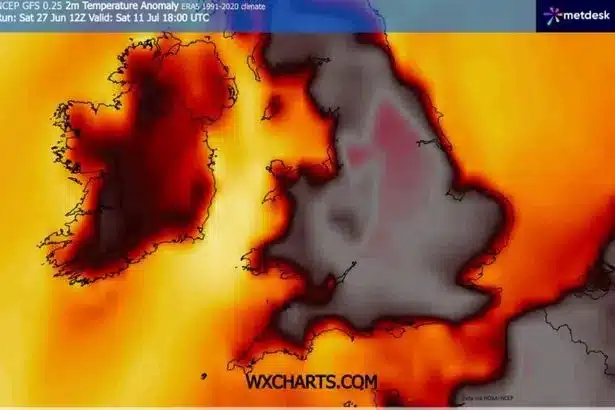
The United Kingdom is bracing for potentially record-breaking temperatures, with forecasts suggesting the mercury could soar to 41C (105.8F) within days. This extreme heat could surpass the nation’s all-time temperature record, which currently stands at 40.3C (104.5F), set in July 2022. The latest weather models indicate that the second week of July could bring an intense heat spell, particularly affecting the south-east of England.
Potential for Record-Breaking Heat
Following a recent period of unusually high temperatures, including the hottest June day ever recorded in the UK at 37.3C (99.1F) on Friday, forecasters are now issuing warnings for an even more significant heatwave. Weather charts highlight that parts of the south-east may experience the most severe conditions, with temperatures potentially exceeding the existing national record.
Timeline of the Approaching Heatwave
The initial signs of this next hot spell are expected to appear around July 8. According to data from WXCharts, temperatures could reach approximately 35C (95F) in parts of the south-east. During this phase, much of central and southern England is predicted to exceed 30C (86F), with some areas in Yorkshire potentially reaching around 33C (91.4F).
Intensification of Heat
The heat is then forecast to intensify significantly. By July 10, weather models suggest that temperatures could approach 40C (104F) across western and southern England. Widespread highs ranging from 37C to 39C (98.6F to 102.2F) are possible across central and southern regions of the country.
Peak Temperatures Expected Mid-July
The most extreme conditions are currently projected for July 11. The GFS (Global Forecast System) model indicates that isolated areas in western England might reach 41C (105.8F). Additionally, a broad area stretching from Yorkshire down to London could also experience temperatures nearing this extreme level.
Understanding Heatwave Definitions
In the UK, a heatwave is officially declared when temperatures reach or exceed a local threshold for three consecutive days. These thresholds vary by county, generally ranging from 25C (77F) to 28C (82.4F). The highest benchmark, 28C, applies to south-east England, with lower thresholds in place for northern and western regions.
Likelihood of Official Heatwave Declaration
If the current July forecasts prove accurate, many parts of the UK would almost certainly meet the criteria for an official heatwave declaration. The regions potentially affected include, but are not limited to, Yorkshire, Nottinghamshire, Lincolnshire, Leicestershire, Derbyshire, Northamptonshire, Lancashire, Cheshire, Shropshire, Bedfordshire, Hertfordshire, Herefordshire, Worcestershire, Warwickshire, Oxfordshire, Buckinghamshire, Berkshire, and Surrey.
Health and Safety Precautions
During periods of extreme heat, public health authorities typically issue advice to help people stay safe. This often includes recommendations to stay hydrated by drinking plenty of fluids, avoiding strenuous activity during the hottest parts of the day, and seeking cool environments. Vulnerable individuals, such as the elderly, very young children, and those with pre-existing health conditions, are particularly at risk and require extra care. It is also advised to check on neighbours and relatives who may be isolated or vulnerable.
Impact on Infrastructure and Environment
Extreme heat can also place a strain on public services and infrastructure. Transport networks, such as railways, can be affected by buckling tracks, leading to delays. The increased demand for electricity due to air conditioning use can also test power grids. Furthermore, the dry conditions associated with heatwaves heighten the risk of wildfires, posing a threat to natural landscapes and property.
Preparing for Extreme Heat
As the UK prepares for this potential heatwave, individuals and communities are encouraged to take proactive measures. This includes ensuring access to cool spaces, having adequate supplies of water, and being aware of the symptoms of heat-related illnesses like heat exhaustion and heatstroke. Emergency services are often put on heightened alert during such events to respond effectively to any incidents.
The approaching forecast for extreme temperatures serves as a reminder of the increasing frequency and intensity of heatwaves, a trend linked to climate change. Public awareness and preparedness are crucial for mitigating the risks associated with these severe weather events.