
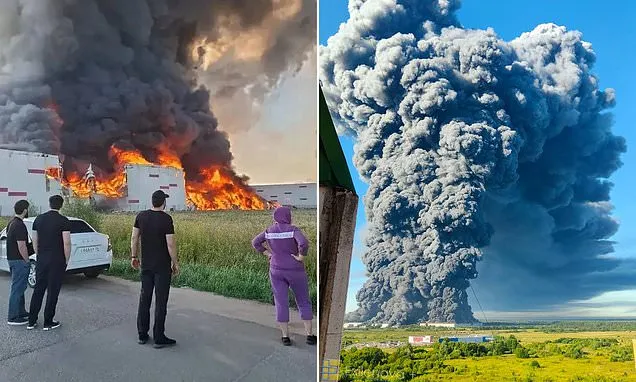
A significant Ukrainian drone attack targeted a major logistics hub operated by Wildberries, a prominent Russian e-commerce company often referred to as the ‘Russian Amazon,’ resulting in multiple fatalities and injuries. The strike, which occurred in the Tambov region, also caused a massive fire that sent thick smoke billowing into the sky, visible for miles. This incident marks a notable escalation in Ukraine’s efforts to disrupt Russian infrastructure and bring the conflict’s impact closer to Russian citizens.
Devastating Strike on Wildberries Hub
The attack on the Wildberries warehouse complex in Kotovsk, Tambov region, located approximately 270 miles southeast of Moscow, claimed the lives of seven night-shift workers and left at least 25 others injured. The scale of the fire was substantial, described as one of the largest during the ongoing conflict, with choking smoke blanketing the area and smog reported in parts of Moscow, over 30 miles away. Initial reports suggest that Ukraine may have employed jet drones in this operation.
The Tambov regional governor, Yevgeny Pervyshov, condemned the incident, labeling it a ‘premeditated terrorist attack against civilians.’ In contrast, pro-Ukrainian channels celebrated the strike, viewing it as a justified counteraction against Russian logistical networks. One such channel, Exile+, stated, ‘Finally, counter-actions against logistical hubs controlled by the Russians have begun. There are far more of these hubs in Russian-controlled territory than there are in ours. They all need to be destroyed.’
Broader Ukrainian Campaign and Russian Responses
This strike on Wildberries is seen as part of a broader Ukrainian strategy to make the consequences of the war palpable for the Russian populace, particularly as President Vladimir Putin continues the conflict. Analysts suggest it could also be a retaliatory measure for previous Russian strikes on Ukrainian postal and logistics facilities.
Beyond the Wildberries attack, other Russian facilities also faced assaults. An oil depot in Noginsk, located in the Moscow region, reportedly exploded and caught fire, necessitating the evacuation of a nearby maternity hospital. Ukraine has also continued its operations targeting Russian oil tankers and supply ships, with reports indicating that 13 such vessels were hit, primarily in the Black Sea.
Escalation Concerns and Russian Recruitment Efforts
The attacks have fueled concerns about further escalation. Ramzan Kadyrov, the leader of Chechnya and a close ally of President Putin, called for direct retaliatory strikes against NATO member states that provide support to Ukraine. Kadyrov suggested that Russia should initiate attacks on countries supplying weapons and intelligence to Ukraine, warning that they should ‘smell the scent of TNT’ and be prepared for military action.
Meanwhile, reports indicate that Russia is facing significant military recruitment challenges. In a move highlighting this perceived desperation, President Putin is reportedly considering allowing individuals convicted of or accused of serious crimes, including mafia members and those involved in organized crime, to enlist in the military. This potential policy shift would permit individuals accused of smuggling, theft of nuclear materials, illegal migration, and involvement with ‘undesirable’ organizations to sign contracts with the Ministry of Defence, particularly during periods of mobilization or wartime.
This development comes amid estimates that Russia is suffering substantial troop losses, potentially around 7,000 killed or wounded weekly. There is also speculation that a full mobilization of military-age men might be ordered following parliamentary elections in September.
Russian Claims of Drone Interceptions
Amidst these Ukrainian strikes, Russian authorities have claimed to have intercepted a significant number of drones. Russia stated that nearly 400 Ukrainian drones were shot down overnight, though independent verification of such figures is often difficult.
Conclusion
The recent drone attacks on Russian infrastructure, particularly the significant strike on the Wildberries logistics hub, underscore Ukraine’s evolving capabilities and strategic objectives. These actions aim not only to degrade Russian military and economic capabilities but also to increase domestic pressure on the Kremlin by making the war’s impact more visible to the Russian public. The situation remains tense, with rhetoric from Russian officials like Kadyrov suggesting a potential for wider regional conflict, while Russia itself appears to be exploring unconventional recruitment methods to sustain its military operations.