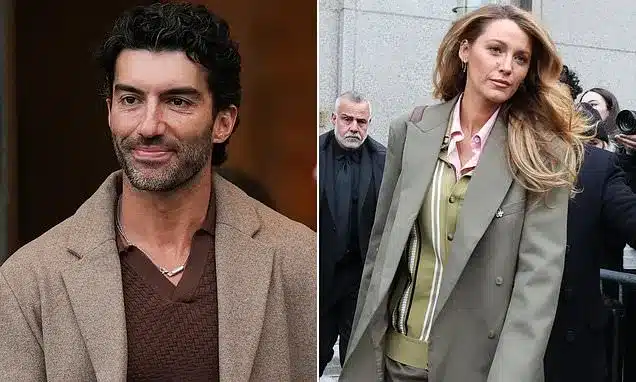
Wayfarer Studios, founded by actor Justin Baldoni, has been ordered by a New York court to pay The New York Times over $171,000 in damages. This ruling stems from a defamation lawsuit that Wayfarer Studios lost, which was initiated in response to the newspaper’s reporting on the challenging production of the film “It Ends with Us.” The legal battle highlights the complexities of anti-SLAPP statutes and the protection of press reporting.
Court Ruling Favors The New York Times
New York Supreme Court Justice Gerald Lebovits issued a decision on Monday, mandating Wayfarer Studios to pay $171,616.20 to The New York Times. This judgment followed a summary judgment that cited anti-SLAPP (Strategic Lawsuit Against Public Participation) statutes. These laws are designed to protect individuals and organizations from frivolous lawsuits intended to censor, intimidate, or silence critics by burdening them with the cost of a legal defense.
The original lawsuit was filed by Wayfarer Studios in January 2025, claiming that a December 2024 New York Times article defamed Baldoni and the production company. The article, titled “We Can Bury Anyone: Inside a Hollywood Smear Machine,” detailed accusations of sexual harassment and retaliation made by the film’s star, Blake Lively, against Baldoni and others involved in the production of “It Ends with Us.”
In response to the court’s decision, a spokesperson for The New York Times expressed satisfaction, stating, “We’re delighted by the court’s decision. The anti-SLAPP statute is designed to combat exactly these kinds of meritless suits brought to silence the press.”
Background of the Lawsuit
The legal proceedings began when Blake Lively filed an initial suit in late 2024 against Justin Baldoni and Wayfarer Studios, related to the making of the romantic drama “It Ends with Us.” Following this, Baldoni filed a countersuit that included Lively, her husband Ryan Reynolds, their representative Leslie Sloane, and The New York Times as defendants. All parties involved have denied the claims made against them.
However, a significant development occurred in May of the previous year when Baldoni and Lively reached a settlement, leading to the dismissal of the remaining parts of their lawsuit with prejudice before a trial could commence. Subsequently, The New York Times, having been named in Baldoni’s countersuit, sought to recover the legal fees it incurred defending itself. This led to the filing of their own suit in New York Supreme Court, invoking the anti-SLAPP law.
Judge’s Reasoning and Damages Awarded
Justice Lebovits’ ruling emphasized that the allegations put forth by Wayfarer Studios lacked a “substantial basis in fact and law,” particularly because they involved “matters of public interest.” The judge noted that the underlying federal action originated from “publicly posted media coverage… about a legal proceeding brought by a prominent actress.”
The court found that The New York Times had demonstrated, as a matter of law, its entitlement to summary judgment on its anti-SLAPP claim. Wayfarer Studios’ request to pause the case pending a potential appeal was also denied. The judge cited an appeal waiver, included in the settlement between Baldoni and Lively earlier that year, as the reason for invalidating this request.
In the final ruling, Justice Lebovits adjusted the total sum awarded to The New York Times. The newspaper had initially sought $181,622.70 in legal fees, but the judge reduced this amount, deeming a portion of the requested fees invalid for award following the federal case proceedings.
About “It Ends with Us” and its Production
The film “It Ends with Us,” based on the 2016 novel by Colleen Hoover, centers on a story of overcoming a traumatic childhood to build a new life. The plot follows Lily Bloom, played by Blake Lively, who develops a connection with a neurosurgeon, Ryle Kincaid, portrayed by Justin Baldoni. However, she begins to witness disturbing aspects of his personality that mirror her parents’ relationship.
Despite its compelling storyline, the film’s production was reportedly troubled. The allegations of sexual harassment and retaliation surfaced during this period, casting a shadow over the project. The movie achieved considerable box office success, grossing $148 million domestically and $350 million globally. However, the goodwill generated by its financial performance has been overshadowed by the controversies surrounding its making.
The cast of “It Ends with Us” also included Hasan Minhaj, Brandon Sklenar, and Kevin McKidd. Blake Lively is known for her role as Serena van der Woodsen in the television series “Gossip Girl” (2007-2012) and has appeared in films such as “The Town,” “The Shallows,” “A Simple Favor,” and “The Rhythm Section.” Justin Baldoni is recognized for his role as Rafael Solano in “Jane the Virgin” (2014–2019) and has also directed films like “Five Feet Apart” and “Clouds,” and authored the book “Man Enough.”
Conclusion
The court’s decision in favor of The New York Times underscores the legal protections afforded to the press under anti-SLAPP statutes. Wayfarer Studios’ obligation to pay over $171,000 in damages reflects the court’s assessment that the studio’s lawsuit against the newspaper was without sufficient factual or legal basis, particularly concerning matters of public interest. This ruling reinforces the principle that lawsuits intended to silence reporting on issues of public concern can carry significant financial consequences.