
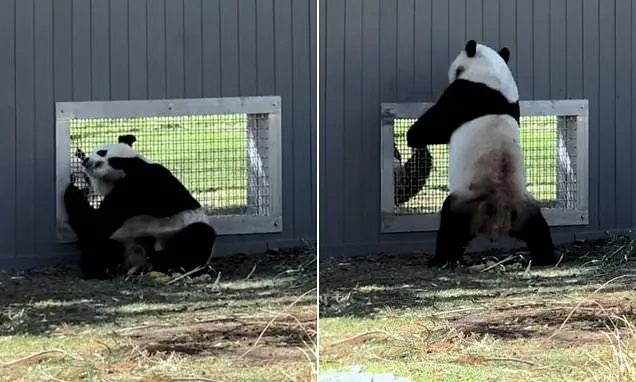
Two young giant pandas recently arrived from China are captivating visitors at the Smithsonian’s National Zoo in Washington, DC, with playful interactions signaling potential breeding success.
New Arrivals Spark Excitement
Bao Li, the male panda, and Qing Bao, the female, both four years old, journeyed from Beijing to the zoo in late 2024. They made their public debut on January 24, 2025, as part of ongoing panda diplomacy efforts, where China loans these iconic animals to zoos worldwide to foster international goodwill—a tradition tracing back over a millennium.
Native exclusively to China, giant pandas in U.S. zoos represent a rare opportunity to observe the species up close. No natural offspring have been born to these pandas in America since August 2020, making any breeding signs a significant achievement.
Adorable ‘Flirting’ Caught on Video
A video from the zoo captures Bao Li rushing to a small ‘howdy’ window in his enclosure, where Qing Bao waits on the other side. The energetic male presses his paws against the mesh, stands tall, shuffles along the wall, rolls, and shimmies with excitement. He dashes around his habitat before returning to engage with her, demonstrating clear mutual interest.
Promising Signs for Future Breeding
Zoo officials describe this behavior as a classic sign of spring. ‘A sure sign of spring is when our giant panda pair, Bao Li and Qing Bao, begin to show interest in one another,’ they stated. ‘The result is an adorable tutorial in how to flirt, panda-style.’
At four years old—equivalent to human early teens—the pandas have not yet reached full breeding age, which occurs between five and seven years. Still, their positive interactions mark an encouraging first step.
Bao Li is currently in rut, the breeding readiness period for males that spans November to May. During this time, he vocalizes and seeks Qing Bao’s attention whenever he spots her. Female pandas typically show interest only during brief hormonal peaks each year, but the pair remains highly active now, offering delightful viewing for observers.