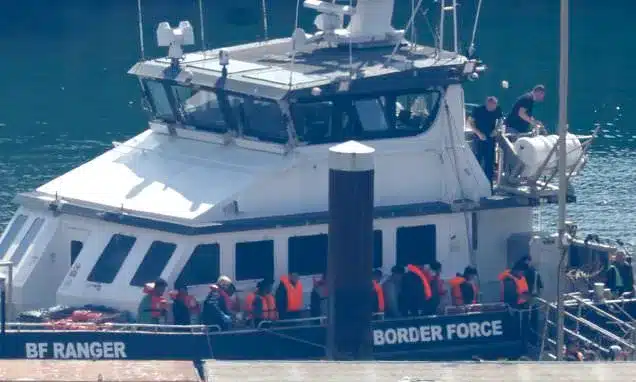
At 11 a.m. yesterday, the Border Force vessel Ranger arrived at the Kent port of Dover with 64 migrants on board. The group had departed from a Dunkirk beach, where French naval forces intercepted their rubber boat mid-Channel before transferring them to the British ship. This routine operation highlights the ongoing arrivals of asylum seekers crossing the English Channel.
Milestone Arrival
Government figures show that one individual among the group marks the 200,000th small boat migrant to reach the UK since records began in 2018. The latest data confirms that arrivals yesterday pushed the total past this significant threshold, equivalent to the population of a city like Bournemouth or Norwich.
Processing at Manston Centre
The migrants, including the 200,000th arrival, now undergo initial processing at the Manston centre in Kent. Border Force officials conduct interviews for up to 72 hours, recording details such as name, age, and nationality. Responses may vary in accuracy during this stage.
Next Steps: Hotel Accommodation
Following Manston, individuals transfer by coach to Home Office hotels. They receive accommodation and a £49 monthly allowance while awaiting further asylum processing, which can last weeks, months, or years.
Historical Context of Small Boat Crossings
Small boat arrivals began in 2018 with 299 migrants from Calais. Early crossings involved small groups in basic vessels. Over time, operations scaled up, with boats now carrying 60 to 70 people, often manufactured abroad and launched from northern France.
Since the Labour government took office in July 2024, more than 70,000 individuals have arrived via this route.
Public and Political Response
Recent local elections saw Nigel Farage’s Reform UK party achieve strong results, reflecting ongoing public concerns over migration. The UK asylum system currently costs £4.7 billion annually, amid debates on border management.
Common Asylum Claims
Many applicants cite persecution, such as fleeing homophobic policies in Uganda, religious conversion risks in Iran, or military conscription in Eritrea. Officials assess these cases through the immigration system, prioritizing genuine refugees amid a mix of economic and humanitarian motivations.