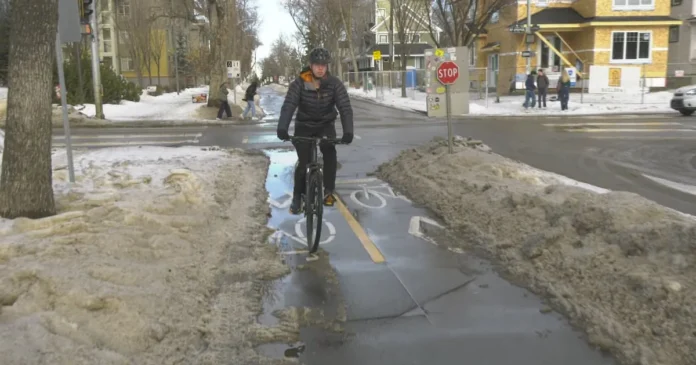
Advocates Push for Improved Ice Control on Active Pathways
Community advocates are calling for enhanced winter maintenance on Edmonton’s cycling infrastructure as persistent icy conditions create challenges for year-round riders. A local transportation organization acknowledges this winter’s particularly difficult weather patterns but maintains more can be done to ensure safer pathways.
Persistent Ice Challenges Cyclists
Ryan Jacques, a representative from active transportation advocacy group Paths for People, noted numerous complaints about hazardous ice accumulation along key routes. “While we recognize crews face significant challenges with freeze-thaw cycles and heavy snowfall, there’s clear room for improvement in maintenance effectiveness,” Jacques stated.
Observations highlighted recurring issues near the University of Alberta campus where priority pathways experience repeated ice formation despite regular snow clearing. Jacques suggested more frequent drain maintenance to prevent water pooling and better snow removal techniques to minimize refreezing risks.
City Responds to Winter Maintenance Concerns
City maintenance officials confirm crews work continuously to manage over 1,000 kilometers of active pathways. “We’re encountering difficulties across various pathway types,” explained Valerie Dacyk, the city’s snow and ice control supervisor. “Our teams operate 24/7, prioritizing bare pavement on high-use routes while ensuring even surfaces on secondary paths.”
Dacyk attributed current challenges to unusual weather patterns, noting: “We’re managing residual ice from December rainfall combined with daily thaw-freeze cycles that create persistent slippery conditions.”
Funding and Priorities Under Review
City Councilor Anne Stevenson confirmed winter maintenance protocols will undergo reevaluation given increasing year-round cycling traffic. “With winter ridership averaging 2,000 daily users, we must balance all transportation needs,” Stevenson noted, confirming all options remain under consideration – including potential use of de-icing materials.p>
“Both cyclists and motorists deserve safe thoroughfares,” Stevenson emphasized. “Council will soon address how we prioritize and fund winter maintenance given our changing climate patterns.”
Transportation analysts note winter cycling participation has grown steadily in Edmonton, increasing pressure on infrastructure planners to develop more resilient winter maintenance strategies for active transportation networks.