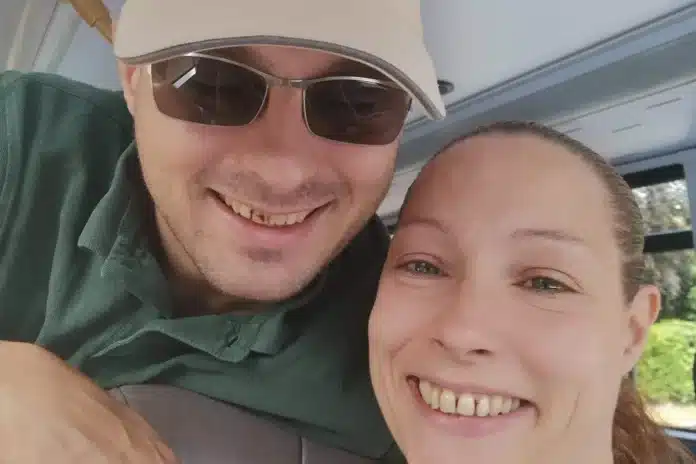
A prisoner serving an abolished indefinite jail term died by suicide, leaving a note that attributed his death to the “cruel” and open-ended nature of his sentence. Steven McBride’s family are now urging for action to support others still subjected to Imprisonment for Public Protection (IPP) sentences, following an inquest that identified uncertainty over his sentence as a contributing factor in his death.
Inquest Reveals Despair Over Indefinite Sentence
Ipswich Coroner’s Court heard that McBride, a beloved uncle and aspiring music producer who was partially sighted, had repeatedly self-harmed as his mental health deteriorated in prison. He was handed an IPP sentence with a minimum tariff of two years and 91 days for a stabbing in 2007. He was found unresponsive in his cell at HMP Warren Hill in Suffolk in September 2024, at the age of 40, nearly 17 years after receiving the controversial sentence. His parole had been refused just months earlier.
His sister, Hayley Prince, described how her brother felt “caught in something he couldn’t escape from” from the moment he received the IPP sentence. “He spent years in and out of prison, being recalled again and again,” she stated. “Every time it seemed like there might be a way forward, something pulled him back.” The parole refusal six months before his death, she added, “broke him.”
Note Reveals Anguish and Frustration
Evidence presented at the inquest included a written message found in McBride’s cell, torn from a notepad. Although the original note was not recovered and its exact writing date is unknown, indentations on the page beneath revealed his profound despair. The message appeared to read: “I am writing this because I cannot do this sentence anymore. IPP is cruel and is solely to blame for my death. No one get my point of view I am sick of not being listened to. This has been torture to the highest order. Don’t get me wrong I deserved prison for what I did but that was almost 19 yrs ago now. I just can’t do it anymore.”
Ms Prince shared the emotional impact of reading the note, stating, “That was probably one of the hardest things I have ever had to read in my life, just knowing he was struggling like that.”
The Lingering Impact of Abolished IPP Sentences
IPP jail terms, abolished in 2012, were not applied retrospectively, leaving thousands of individuals in a state of perpetual uncertainty, often trapped in prison without a release date or facing a cycle of indefinite recall for minor breaches of strict licence conditions. These open-ended punishments have been linked to a significant number of suicides in prison and have been described as “psychological torture” by the United Nations. Despite widespread criticism, successive governments have declined to resentence those still serving these terms.
A Life Marked by Trauma and Hope
Ms Prince remembered her brother, Steven McBride, as her “closest friend.” They shared a strong bond, particularly after their father died by suicide when Stephen was an infant. During their teenage years, she became increasingly protective as he faced bullying due to his partial sight. Despite a challenging childhood, she described Mr McBride as “very funny” and a lover of house music, who harbored dreams of becoming a music producer.
However, he struggled with alcohol and encountered legal difficulties. His mother passed away while he was on remand for the violent attack that led to his IPP sentence. He served approximately ten years before his first release, only to be recalled within two weeks for consuming alcohol. He was released again in January 2018 but was recalled a year later for another offense, remaining in prison until his death.
“I am not saying my brother didn’t deserve a long sentence,” Ms Prince emphasized. “He deserved a long sentence, 100 per cent, but not a sentence that’s inhumane and unjust.”
Concerns Over Monitoring and Calls for Resentencing
In the months leading up to his death, Mr McBride made multiple attempts on his own life and was subject to Assessment, Care in Custody and Teamwork (ACCT) procedures. However, this monitoring was discontinued five days before his passing. He was discovered unresponsive in his cell on the morning of September 2, 2024, by a prison officer who unlocked his door at 7:45 am. It is estimated he died between 12 and 19 hours prior.
In a poignant tribute read to the court, Ms Prince stated, “Steven wasn’t perfect. He had flaws, struggles, and moments he probably wished he could change. But none of that takes away from who he was to me. He was my brother. My closest friend. And he was deeply, truly loved.”
She has advocated for improved monitoring for high-risk inmates and called for the resentencing of the approximately 2,400 prisoners still serving IPP jail terms. “Give them their lives back,” she urged. “It’s been abolished. You can’t keep punishing people on a sentence that has been abolished. Why is it still going on?”
Legal Representation Highlights IPP Sentence as Key Factor
Claire Brigham, a partner at Hodge Jones & Allen, who represented Mr McBride’s family at the inquest, identified the IPP sentence as the “main factor” in his death. “I think it’s one of the clearest cases that I have seen on that point,” she commented. “There are lots of references throughout the records talking about the IPP sentence and distress and his progression.”
In their narrative conclusion, the jury found that Mr McBride felt “trapped, hopeless and frustrated” by his jail term. They determined that numerous progression plans were refused due to his emotional instability and substance misuse, which left him “demotivated and hopeless.” The jury concluded that “Mr McBride’s IPP sentence, parole refusal, uncertainty over his sentence progression and complex health issues all had a relevant bearing on his actions on the 2nd September 2024.” He died following an act of self-harm, although the jury could not definitively state he intended to die.
Ministry of Justice Response
A spokesperson for the Ministry of Justice stated: “It is right that IPP sentences were abolished and we have already taken action to support these offenders to move on with their lives. While public protection is our number one priority, we are working with organisations and campaign groups to support those still serving these sentences, including through access to mental health support and rehabilitation programmes.”
If you are experiencing feelings of distress, or are struggling to cope, you can speak to the Samaritans, in confidence, on 116 123 (UK and ROI), email jo@samaritans.org, or visit the Samaritans website to find details of your nearest branch. If you are based in the USA, and you or someone you know needs mental health assistance right now, call or text 988, or visit 988lifeline.org to access online chat from the 988 Suicide and Crisis Lifeline. This is a free, confidential crisis hotline that is available to everyone 24 hours a day, seven days a week. If you are in another country, you can go to www.befrienders.org to find a helpline near you.