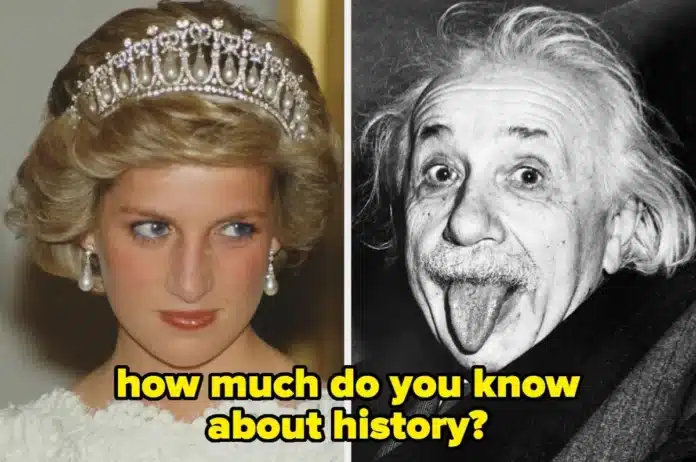
Many historical figures are household names, their deeds and stories taught in classrooms worldwide. We can readily recall their accomplishments, their eras, and their impact on the world. However, a common challenge arises when attempting to identify these same individuals from their photographs. Despite widespread name recognition, their visual likenesses often remain elusive to the general public. This phenomenon highlights a fascinating disconnect between historical knowledge and visual memory, prompting a closer look at how we perceive and remember influential figures from the past.
The Challenge of Visual Recognition
The study of history often emphasizes narratives, dates, and significant events, building a mental profile of individuals based on their actions and legacies. While portraits and photographs exist for many prominent figures, they are not always the primary focus of historical education or general public awareness. Consequently, someone might know extensive details about Abraham Lincoln’s presidency or Marie Curie’s scientific breakthroughs but struggle to pick their portraits out of a lineup. This quiz aims to bridge that gap, testing the ability to connect well-known names with their visual representations.
Key Figures and Their Visual Identity
The challenge lies in recalling the faces of individuals whose names are synonymous with pivotal moments or profound contributions. Consider these examples:
- Abraham Lincoln: The 16th U.S. President, renowned for leading the nation through the Civil War and abolishing slavery. His distinctive facial features, including his tall stature and beard, are iconic, yet often not the first thing recalled when his name is mentioned.
- Marie Curie: A pioneering physicist and chemist, the first woman to win a Nobel Prize and the only person to win Nobel Prizes in two different scientific fields. Her image is often associated with scientific laboratories, but her personal appearance might be less familiar than her groundbreaking research.
- William Shakespeare: Widely regarded as the greatest writer in the English language and the world’s greatest dramatist. While his plays and sonnets are universally studied, the surviving contemporary portraits of him are few and their authenticity debated, making his visual identity somewhat ambiguous.
- Cleopatra: The last active pharaoh of Ptolemaic Egypt. Her dramatic life and relationships with Julius Caesar and Mark Antony are legendary, but historical depictions vary, and a definitive, universally recognized image is scarce.
- Albert Einstein: The theoretical physicist who developed the theory of relativity. His wild hair and thoughtful expression are widely recognized, often symbolizing genius, yet the specifics of his appearance might still surprise some.
- Joan of Arc: A national heroine of France, believed to have been guided by divine visions. Depictions of her often focus on her armor and military role, potentially overshadowing the visual details of her youth.
- Leonardo da Vinci: A true Renaissance polymath, known for masterpieces like the Mona Lisa and The Last Supper, as well as his scientific inquiries. While his art is famous, his own self-portraits are subjects of scholarly discussion, and his everyday appearance is less commonly known.
- Queen Elizabeth I: The formidable monarch of England and Ireland. Her elaborate gowns and regal bearing are often depicted, but the underlying features of her face might be less familiar than her powerful reign.
- Martin Luther King Jr.: A pivotal leader of the American civil rights movement. His powerful speeches are well-remembered, and photographs of him are prevalent, yet the nuances of his facial features might not be instantly recalled by everyone.
- Isaac Newton: The English mathematician and physicist who formulated the laws of motion and universal gravitation. His scientific contributions are immense, but his visual representation, often a stern-faced portrait, may not be as readily accessible in public memory.
Why the Disconnect?
Several factors contribute to this common difficulty in matching names to faces. Firstly, historical education often prioritizes the impact and achievements of individuals over their physical appearance. Textbooks and lectures focus on ‘what they did’ rather than ‘what they looked like.’ Secondly, the surviving visual records can be inconsistent. Early photographs might be rare, stylized, or of poor quality. Portraits, while artistic, can be idealized or interpreted differently by artists. Furthermore, in the digital age, we are bombarded with images daily, and the sheer volume can dilute our ability to retain specific visual details of historical figures unless they are consistently reinforced.
The context in which we encounter these figures also plays a role. We might see their name associated with a building, a theory, or a historical event, activating our knowledge of their work without necessarily conjuring a clear mental image. The internet and social media, while providing access to vast amounts of information, can also present historical figures in fragmented ways, making it harder to form a cohesive visual memory.
Testing Your Historical Recall
This exercise serves as a fun and engaging way to test and improve one’s visual recall of historical personalities. By presenting photographs, it encourages a more holistic understanding of these individuals, integrating their appearance with their known legacies. It’s a reminder that history is not just about facts and dates, but also about the real people who shaped our world, each with a unique face and story.
Conclusion
Recognizing historical figures from photographs can be a surprising challenge, even for those with a strong general knowledge of history. The disconnect between name recognition and visual identification underscores the varied ways we process and retain information about the past. Engaging with visual trivia like this not only sharpens our memory but also deepens our connection to the individuals whose lives and actions continue to influence the present.