
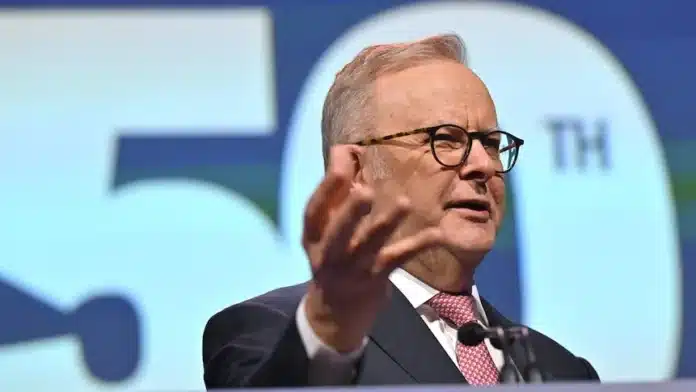
Prime Minister Anthony Albanese has stated his personal opposition to a new Labor policy that would allow voluntary assisted dying (VAD) consultations via telehealth. While the party’s national conference adopted a platform supporting expanded VAD access through phone or video, Albanese expressed concerns that such a move could undermine the existing safeguards and potentially be misused. He emphasized his support for voluntary euthanasia but highlighted the critical need for robust protections.
Albanese’s Stance on Telehealth VAD
The Prime Minister articulated his reservations about using telehealth for voluntary assisted dying consultations, noting that he is “yet to be convinced” it is the appropriate method. “I think it is important that people have the right to die… with dignity,” Albanese stated, “But it’s also important that protections be placed around it.” His primary concern, as shared on ABC’s Insiders, revolves around the potential for “misuse” or the risk that telehealth could “undermine the system in itself.” Despite his personal reservations, Albanese acknowledged and respected the differing viewpoints within the party on this sensitive issue.
Labor’s Policy Shift and Current Restrictions
The recent 50th national conference of the Labor Party saw the adoption of a platform that includes a commitment to expanding voluntary assisted dying access to telehealth. This policy shift was accompanied by enshrining the right to a conscience vote on the issue within the party’s constitution. Currently, Australia prohibits the use of telehealth for VAD consultations, with healthcare professionals facing significant penalties, including fines up to $300,000, for violations. Advocates for VAD have argued that this restriction disproportionately affects individuals in rural and remote areas, and they welcomed the Labor platform amendment aimed at removing such “barriers” to end-of-life care.
Government Process for VAD Telehealth
Any potential move to lift the federal ban on discussing VAD via video or phone would require a multi-stage approval process. Prime Minister Albanese clarified that such a proposal would first need to be considered and approved by the cabinet. Following cabinet endorsement, the matter would then be presented to the parliament for a vote. “Governments determine what governments do… what the conference does has put general direction of what they want, and it’s clear that is a matter of conscience,” Albanese explained, underscoring that while the conference sets a direction, the government makes the ultimate decisions on legislative action.
Defense of Labor Conference Cohesion
Beyond the VAD policy, Prime Minister Albanese also addressed criticisms regarding the management of the Labor national conference, which concluded in Adelaide. He defended the conference proceedings as evidence of a more united and cohesive party. Albanese rejected suggestions that internal disagreements were suppressed, asserting that the broad support for the party’s platform demonstrated “broad consensus” on the government’s direction. “We know who we are and what we stand for, and the direction in which we want to take the country,” he remarked.
Debates on Foreign Policy and Other Issues
During the conference, a resolution critical of the Israeli government, championed by backbench MP Ed Husic, did not advance for debate. Albanese stated his belief that the party’s platform struck the right balance, affirming Israel’s right to exist within secure borders while also supporting the aspirations of Palestinians for their own state. He expressed no issue with delegates pursuing their objectives, emphasizing the democratic process within the party. Other proposed debates, such as those concerning a tax on gas exports or the AUKUS defence pact, also did not materialize on the conference floor.
Economic and International Matters
The Prime Minister also touched upon several other significant issues. He confirmed his intention to raise concerns with US President Donald Trump regarding the 12.5 percent export tariffs imposed on Australia, describing them as “unjustified.” Regarding the impact of global events on oil prices, Albanese acknowledged the situation but indicated no immediate plans to extend the cut to the fuel excise beyond its scheduled end in July. Furthermore, he revealed a government aim to release an exposure draft of legislation for data centre standards by the end of the year, with final legislation anticipated in early 2027, following discussions with state and territory premiers.
Local Government Funding Agreement
A notable outcome of the Labor conference was the endorsement of changes to the party platform concerning local government funding. Delegates agreed to a federation compact between local councils and the Commonwealth, designed to increase federal financial support. This agreement, which aims to address the long-standing funding crisis in local government, was the result of negotiations that averted a potentially contentious floor debate. Representatives from unions and local government bodies welcomed the commitment, highlighting its importance for service delivery and job security in communities across Australia.
Broader Platform Changes
In addition to the key issues discussed, the Labor conference saw delegates approve platform changes covering a wide array of policy areas. These included advancements in artificial intelligence, enhancements to workers’ rights, more stringent gambling reforms, measures related to decarbonisation, and the expansion of dental coverage under Medicare. The comprehensive review and update of the party platform reflect a broad agenda for the government moving forward.
In conclusion, while the Labor Party has formally adopted a policy to explore telehealth for voluntary assisted dying, Prime Minister Albanese has personally voiced opposition due to concerns about safeguards. His remarks, alongside discussions on party unity, foreign policy, economic matters, and local government funding, paint a picture of a government navigating complex policy decisions and internal party dynamics.