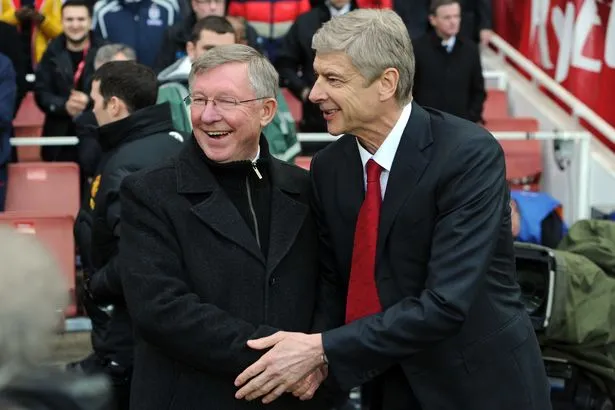
Sir Alex Ferguson’s persuasive powers were instrumental in convincing defender Chris Smalling to change his career trajectory, opting for Manchester United over his childhood club, Arsenal. Smalling, who harbored a long-held aspiration to play for the Gunners, was on the verge of joining the North London club from Fulham. However, a late intervention from the legendary Manchester United manager, Sir Alex Ferguson, led to a dramatic U-turn, ultimately sending Smalling to Old Trafford.
From Arsenal Fan to Manchester United Star
Growing up, Chris Smalling was a devoted supporter of Arsenal. His dream was to represent the club he followed passionately. As his career progressed at Fulham, the possibility of joining Arsenal became a tangible prospect. Negotiations were underway between Fulham and the Gunners, with Arsène Wenger’s renowned ability to nurture young talent a significant draw for Smalling. He felt a strong pull towards Arsenal, believing it was where his future lay.
The situation shifted dramatically when Manchester United entered the race. Recounting the pivotal moment, Smalling explained that he was preparing to leave a team bus during an away match at Blackburn when Fulham’s manager, Roy Hodgson, informed him of Manchester United’s accepted bid. This news caught him by surprise and disrupted his firmly held plans to join Arsenal.
Ferguson’s Convincing Argument
Despite his initial leanings towards Arsenal, Smalling engaged in a conversation with Sir Alex Ferguson. The Manchester United manager addressed Smalling’s concerns about playing time directly. Ferguson assured him, “I wouldn’t sign you if I didn’t think you could play games.” This directness, coupled with Ferguson’s formidable presence and reputation, resonated deeply with Smalling. He felt an immediate connection to Ferguson’s approach and ultimately made the decision to commit to Manchester United.
Smalling reflected on the decision, stating, “Maybe his aura felt right, but I made the right decision because I was soon playing alongside great players and winning the league.” This sentiment underscores the impact of Ferguson’s personal appeal in swaying the young defender.
The Transfer Details and Smalling’s Rise
The transfer to Manchester United was finalized for an initial fee reported to be around £8 million. This figure was subject to increase, potentially reaching £12 million, based on appearance and performance-related bonuses. This move marked an extraordinary ascent for Smalling, who had been playing non-league football just two years prior.
In 2008, Smalling was a player for Maidstone, a club in the non-league system. His subsequent move to Fulham saw him earning a modest wage of £5,000 per week. Joining Manchester United represented a significant financial upgrade, quadrupling his salary. Notably, his former non-league club, Maidstone, did not receive any compensation from the transfer, as Smalling was not under a formal contract with them at the time of his departure.
Although Arsenal had reportedly met Fulham’s £10 million valuation before Manchester United’s bid, it was Sir Alex Ferguson’s personal conviction and conversation with Smalling that ultimately tipped the scales. The defender chose to forgo the allure of Arsène Wenger and Arsenal in favor of the opportunities presented at Manchester United.
A Trophy-Laden Career at Manchester United
The decision to reject Arsenal proved to be a highly successful one for Chris Smalling. During his tenure at Manchester United, he amassed an impressive collection of silverware. His trophy cabinet includes two Premier League titles and a Europa League trophy. He also contributed to numerous domestic cup victories and was part of the team that reached the Champions League final in his inaugural season at the club.
Over a decade with Manchester United, Smalling made 323 appearances, scoring 18 goals and providing three assists. His consistent performances solidified his place in the team’s defense.
Subsequent Career Moves
Following his departure from Manchester United, Smalling embarked on a new chapter in his career. He joined AS Roma on loan for the 2019-20 season. During his time in Italy, he made history by becoming the first English player since David Beckham to score at least two goals in a single Serie A campaign. His performances were strong enough to warrant a permanent move to the Italian club, who signed him for a fee of £17 million.
Smalling spent four years with Roma before moving to Al-Fayha. As of recent reports, the 36-year-old defender is currently without a club, although he has not yet officially announced his retirement from professional football.
Conclusion
Chris Smalling’s transfer saga highlights the profound impact a manager’s personal appeal can have on a player’s decision. What began as a lifelong dream to play for Arsenal ultimately led to a highly decorated career at Manchester United, shaped by the direct influence of Sir Alex Ferguson. Smalling’s journey from non-league football to becoming a Premier League champion and a respected defender in Italy is a testament to his talent and the pivotal choices made during his career.