The enduring mystery of the lost Inca city of Vilcabamba, the last refuge of the Inca empire, has captivated explorers and historians for centuries. While Hiram Bingham III famously brought Machu Picchu to global attention in 1911, believing it to be the fabled stronghold, it was later expeditions, particularly that of Gene Savoy in 1964, that provided compelling evidence for the true location of Vilcabamba at Espíritu Pampa. This discovery, followed closely by a BBC film crew, shed new light on the final chapter of Inca resistance against the Spanish conquistadors.
The Legend of Vilcabamba
Vilcabamba, meaning “sacred plain” in the Quechua language, was more than just a city; it was a symbol of Inca resilience. Following the Spanish conquest of Cusco in 1536, the Inca king Manco retreated into the remote Peruvian Andes with his people. Legend held that they established a capital in exile, a place of palaces and temples where Manco safeguarded the empire’s treasures and the sacred mummies of his ancestors. Chroniclers like the 16th-century friar Martín de Murúa described this hidden sanctuary as a place where the Incas maintained a semblance of their former grandeur, enjoying “scarcely less of the luxuries, greatness and splendour of Cusco.” Beyond being a refuge, Vilcabamba served as a crucial center for Inca resistance, from which they launched guerrilla warfare and instigated rebellions against their Spanish conquerors. However, this last bastion of Inca independence was eventually set ablaze by its inhabitants and abandoned in 1572 as Spanish forces closed in, leaving its location shrouded in mystery for centuries.
Hiram Bingham’s Quest and Machu Picchu
In 1909, Hiram Bingham III, an American professor of Latin American history, was approached by Peruvian landowners who believed a site known as Choquequirao might be the legendary lost city. Despite his lack of archaeological expertise and initial skepticism about hidden treasures, Bingham was persuaded by local officials, who mistook his academic title for archaeological prowess. He famously wrote that he “knew very little about the Incas” and relied on guidebooks for advice. While Bingham’s 1911 expedition did lead him to the vicinity of what would later be identified as Espíritu Pampa, a combination of harsh weather, dwindling supplies, and a threat of desertion from his porters prompted him to move on. He subsequently announced the discovery of Machu Picchu, a breathtaking citadel perched high on a mountain ridge, which he firmly believed to be the lost Inca capital. For decades, Machu Picchu was widely accepted as Vilcabamba, captivating the world with its stunning architecture and dramatic setting.
Gene Savoy’s Challenge and the Real Vilcabamba
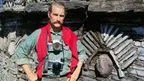
Fifty-three years after Bingham’s pronouncements, American explorer Gene Savoy, often dubbed “the real Indiana Jones,” embarked on a quest to find the true Vilcabamba. In August 1964, accompanied by Peruvian explorer Antonio Santander Cascelli, Savoy ventured into the remote cloud forests northwest of Machu Picchu, near a site known as Espíritu Pampa. Despite initial reluctance from local guides, who feared ancient tribal legends, Savoy and Santander were eventually led to a sprawling complex of moss-covered ruins spread across three mountain plateaus. They discovered evidence of a palace, granite and limestone structures, and fountains, with the first plateau alone being significantly larger than Machu Picchu. Savoy concluded that Espíritu Pampa was the refuge used by the last Incas during their final struggle. His findings directly challenged the long-held belief that Machu Picchu was Vilcabamba.
Confirmation and Lingering Mysteries
The significance of Savoy’s discovery was amplified when a BBC film crew, part of David Attenborough’s Adventure series, followed his trail just six weeks later. Their journey involved arduous travel by rubber dinghy, mule, and jungle treks, underscoring the remoteness of the site. While the crew initially had doubts based on information gathered along the way, their determination to see the ruins for themselves was unwavering. The crucial piece of evidence that began to shift scholarly consensus came in the form of roof tiles found at Espíritu Pampa. These tiles, Spanish in design but with distinctive Inca coloring and markings, were unusual, as the Incas typically used thatch. However, Martín de Murúa’s chronicle mentioned the Inca capital having a palace covered in roof tiles. This discovery, coupled with later analysis by Inca expert John Hemming, director of the Royal Geographic Society, who matched eyewitness accounts and historical chronicles to the site’s details, provided strong tangible evidence. Hemming concluded, “No one now disputes that this was the site of ancient Vilcabamba.”
Despite the confirmation of Espíritu Pampa as Vilcabamba, mysteries persist. Savoy himself believed that not all the Inca gold and jewels were recovered, speculating in 1967 that much of it might have been hidden in lakes and caves to prevent it from falling into Spanish hands. He spoke of finding uncharted lakes and tunnels during his expeditions. Modern archaeologists, like Javier Fonseca of Peru’s Ministry of Culture, continue to explore the region, noting in 2018 that the area remains largely undisturbed and unlooted, hinting at further discoveries. The legend of the “lost Inca treasure” endures, fueling speculation about its possible whereabouts and the secrets still held within the dense jungle surrounding the last Inca capital.