
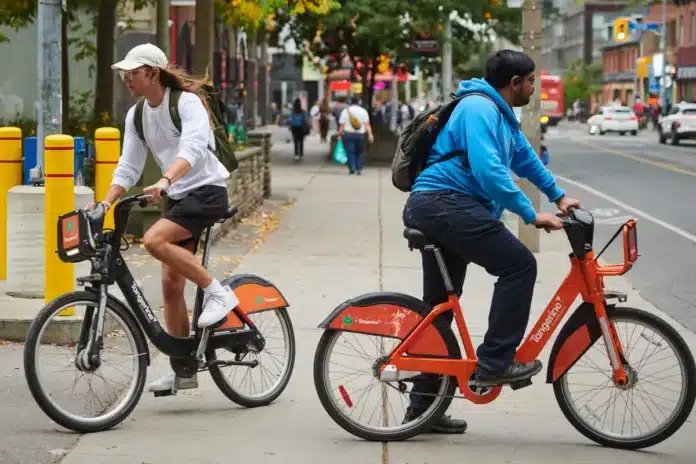
The Ontario provincial government is moving forward with plans to remove dedicated bike lanes from several key Toronto streets, including Bloor Street, Yonge Street, and University Avenue. This decision follows a mid-August ruling by the Ontario Court of Appeal, which overturned a lower court’s finding that the removal of these lanes violated the Canadian Charter of Rights and Freedoms. The provincial government stated it is now seeking proposals from companies to carry out the work, with the earliest removals anticipated in Etobicoke.
Background of the Bike Lane Controversy
The provincial government, led by Premier Doug Ford, initially implemented a policy to remove bike lanes and reallocate road space to vehicles at the end of 2024. This policy aimed to ease traffic congestion and improve the flow of vehicles and goods. The recent court decision has allowed the government to reactivate and proceed with these plans.
The scope of the planned removals extends beyond the initial streets mentioned. University Avenue’s northern section, which becomes Queen’s Park Crescent and then Avenue Road, is also included in the provincial government’s considerations. Transportation Minister Prabmeet Sarkaria emphasized the government’s commitment to fulfilling its promises, stating, “Under Premier Ford’s leadership, we’re getting people and goods moving again and giving commuters back more of their time.”
Details of the Removal Process
The province has officially begun the process by issuing a request for proposals (RFP) to interested companies. These proposals will outline how the streets will be redesigned, either by completely removing the existing bike lanes or by modifying them to accommodate additional vehicle lanes. The government indicated that the work is set to commence promptly.
Specifically, a segment of Bloor Street West, identified as requiring minimal design adjustments, is slated to be the first location where removal work will begin. This immediate commencement signals the province’s intent to act swiftly on its policy objectives.
Arguments for and Against Bike Lane Removal
Government’s Rationale
The primary justification provided by the provincial government for removing the bike lanes centers on improving traffic flow and reducing commute times for drivers. Officials have frequently cited the need to enhance mobility for both people and commercial goods as a key objective. The argument is that by reintroducing vehicle lanes, the capacity of these major arteries can be increased, thereby alleviating congestion during peak hours.
Supporters of the government’s plan often point to the economic benefits of smoother transportation networks, suggesting that faster movement of goods can positively impact businesses. They also argue that the bike lanes, in their current configuration, may not be utilized by a sufficient number of cyclists to justify the loss of vehicle space, especially on highly trafficked routes.
Concerns from Cycling Advocates and Public
Conversely, cycling advocates and a segment of the public have expressed significant concerns regarding the removal of the bike lanes. They argue that these lanes are crucial for promoting active transportation, reducing carbon emissions, and ensuring the safety of cyclists. The removal of dedicated infrastructure is seen as a step backward in efforts to create a more sustainable and multimodal transportation system in Toronto.
Critics of the plan highlight potential increases in traffic congestion as more vehicles are funneled onto fewer lanes, leading to gridlock and longer travel times for everyone, including transit users. There are also safety concerns, as cyclists may be forced to share lanes with faster-moving vehicles or navigate less predictable road conditions, increasing the risk of accidents.
Furthermore, many argue that the removal of bike lanes contradicts broader urban planning goals focused on creating livable, environmentally friendly cities. The decision has sparked debate about the prioritization of different modes of transportation and the long-term vision for Toronto’s streetscape.
Legal and Political Context
The legal battle over the Bloor Street bike lanes, in particular, has been ongoing for years. The initial implementation of these lanes was met with opposition, leading to various legal challenges. The Ontario Court of Appeal’s decision to overturn the lower court ruling has been seen as a significant victory for the provincial government in its efforts to assert control over provincial highways and major roadways within the city.
The political dimension of this issue remains potent, with different levels of government and various community groups holding deeply entrenched positions. The provincial government’s push to remove the lanes is framed as fulfilling a campaign promise and addressing the concerns of drivers, while opponents view it as a move that undermines active transportation and environmental initiatives.
Future Implications for Toronto’s Transportation Network
The provincial government’s decision to proceed with the removal of bike lanes has broad implications for Toronto’s transportation future. It raises questions about the balance between accommodating private vehicles and promoting sustainable transit options like cycling and public transit. The outcome of these removals could influence future infrastructure investments and policy decisions regarding road use in the city.
As the province moves forward with seeking bids and commencing work, the debate over the optimal use of urban road space is likely to continue. The long-term impact on traffic patterns, cyclist safety, and the city’s environmental goals will be closely watched by residents, policymakers, and transportation experts alike.
The government’s stated goal is to improve the efficiency of the transportation network for all users. However, the removal of dedicated cycling infrastructure is a contentious issue, highlighting the complex challenges of managing urban mobility in a growing and diverse city. The coming months will reveal the practical effects of these changes on Toronto’s streets.