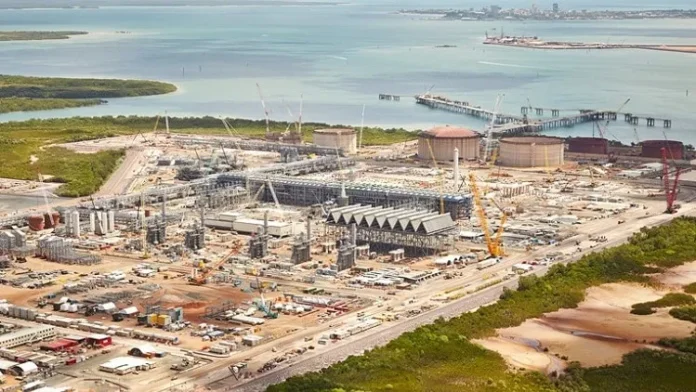
An independent audit has determined that Inpex has made substantial progress in correcting significant errors in the reporting of toxic emissions from its Ichthys LNG facility in Darwin. The review, commissioned by the Northern Territory Environment Protection Authority (NT EPA), found that while the company has implemented corrective actions, further work is still required to ensure complete accuracy and direct measurement of all emission sources.
Audit Findings on Inpex Emissions Reporting
The audit, conducted by consulting firm AECOM, examined Inpex’s emissions reporting practices, particularly concerning toxic substances like benzene, a known carcinogen. The report concluded that there was no evidence of deliberate falsification of data by Inpex. Instead, it identified widespread errors that led to the systematic underestimation of emissions since 2018. The auditor, Todd Mitchell, noted that his findings were based on information provided by Inpex and publicly available documents, as no independent site inspection was performed.
Key findings from the audit include:
- Inpex has taken “significant steps” to rectify its emissions under-reporting.
- The company has implemented “appropriate improvement actions” to enhance reporting accuracy.
- Not all historical emissions errors have been corrected to date.
- Inpex does not yet directly measure all emission sources, relying on estimations for some.
Inpex Faces Regulatory Action and Calls for Improvement
Despite the audit’s findings of corrective actions, Inpex is currently facing prosecution by the NT environmental regulator for its historical under-reporting of emissions. The company was scheduled for its initial court appearance on Wednesday, but the proceedings have been postponed until November. In July, the NT EPA proposed significant changes to Inpex’s operating license, including the introduction of pollution limits, as part of a broader regulatory crackdown.
The NT EPA’s comprehensive approach involved ordering the environmental audit to assess Inpex’s pollution control capabilities, the effectiveness of its remediation efforts, and the accuracy of its submissions to the National Pollutant Inventory. The audit report explicitly stated that while Inpex has made considerable efforts, “there is additional work to complete.”
Methodologies and Remaining Uncertainties
The audit noted that Inpex has begun accounting for emissions from gas ships while they are docked at the facility. However, for these emissions, the company is currently using industry averages derived from the Emission Estimation Technique Manual for Maritime Operations, rather than direct on-site measurements. The auditor deemed this an “appropriate methodology” given the variability of ship emissions and the absence of direct sampling data.
In addition to ship emissions, Inpex is now also tracking ammonia, fuel, and condensate emissions. The company is in the process of transitioning from its internal spreadsheet system to a more advanced environmental data management system, which the auditor believes could significantly reduce future reporting errors if implemented effectively.
However, the audit also raised questions about whether Inpex is reporting all necessary pollutants. While the company is reporting emissions for the 93 pollutants listed by the government as posing potential risks, the auditor expressed uncertainty about whether a comprehensive review of all potential pollutants had been conducted. Mercury was cited as an example of a toxic pollutant that is not being reported from all sources within the facility.
Several sources of “uncertainty” were identified in the reporting process, including the use of annual measurements that may not fully capture emission variability. Fugitive emissions, such as those from leaks, were recognized as a significant source of uncertainty. The auditor pointed out that some emissions continue to be estimated using government averages rather than direct measurement at the source. Despite these uncertainties, the auditor ultimately found them to be “acceptable” within the current framework.
Industry and Environmental Group Reactions
In response to the audit, the NT EPA confirmed that Inpex has committed to adopting all the auditor’s recommendations. This includes conducting an annual assurance assessment and updating all emission calculations.
However, environmental groups have expressed ongoing concerns. Dan Broun, a climate campaigner at the NT Environment Centre, stated that the audit clearly indicates Inpex’s emissions issues are “yet to be rectified.” He added, “The fact that ongoing audits are required show that Inpex hasn’t got a handle on the situation at Ichthys and must not be trusted when it comes to Darwin’s air quality.”
Inpex senior vice president Bill Townsend acknowledged the audit, stating it highlights the company’s efforts to correct unintentional errors in emission calculation and reporting. He emphasized that Inpex’s highest priorities are the safety and well-being of people, and the protection of the environment and community through safe operations. Townsend also noted that continuous air quality monitoring in the Darwin region consistently shows emission levels well within government guidelines, indicating no increased health risk to the community, workforce, or environment from the Ichthys LNG facility.
Conclusion
The independent audit indicates that Inpex is actively working to improve its emissions reporting accuracy at the Ichthys LNG facility, having taken significant steps to address past underestimations. While the company has committed to implementing the auditor’s recommendations, including enhanced data management and ongoing assessments, environmental advocates remain vigilant, citing the need for continued scrutiny and direct measurement of all emissions. The ongoing prosecution by the NT EPA underscores the seriousness of the reporting errors, even as Inpex asserts that current air quality remains within safe regulatory limits.