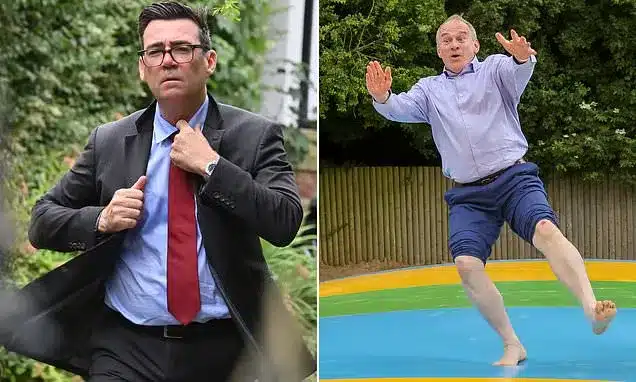
Potential future Labour leader Andy Burnham could explore coalition arrangements with the Liberal Democrats to form a government following the next general election, should no single party secure an outright majority. With current polling suggesting the possibility of a hung parliament in 2029, sources close to Mr. Burnham indicate that exploratory talks with the Liberal Democrats are a distinct possibility.
Potential Common Ground for a Coalition
A key area of potential alignment between a Labour party led by Mr. Burnham and the Liberal Democrats is electoral reform. Mr. Burnham is reportedly committed to investigating the implementation of a new voting system, a long-standing policy objective of the Liberal Democrats. This shared interest in reforming the current first-past-the-post system could serve as a foundational element for any future negotiations.
Recent polling data suggests that even with Mr. Burnham at the helm, Labour might not achieve a majority in the next general election. A ‘More in Common’ poll indicated a projected 30 percent vote share for Labour, while Reform UK was predicted to garner 27 percent. Such figures imply that neither party would be in a position to govern alone, necessitating collaboration with other political forces, reminiscent of the 2010 Conservative-Liberal Democrat coalition formed by David Cameron and Nick Clegg.
The prospect of coalition talks might also evoke memories of Labour’s unsuccessful attempts to form a coalition government in 2010, a period when Mr. Burnham served as a cabinet minister under Prime Minister Gordon Brown. That outcome led to an extended period in opposition for Labour until their victory in 2024 under Sir Keir Starmer.
Strategic Considerations for Labour
Sources close to Mr. Burnham emphasize the need for Labour to prepare for a hung parliament scenario. With the next general election due within three years, proactive engagement with potential coalition partners like the Liberal Democrats is seen as strategically vital. The shared commitment to electoral reform, a topic Mr. Burnham has openly discussed during his campaign appearances, is viewed as a particularly strong starting point for such discussions.
The Liberal Democrats have consistently advocated for electoral reform, arguing it would create a more representative and equitable political system. Within the Labour Party itself, there is significant support for this agenda. A group of 64 Labour Members of Parliament recently co-signed an amendment to the Representation of the People Bill, calling for the establishment of a national commission dedicated to electoral reform. One MP involved in this initiative stated that Mr. Burnham has indicated his intention to launch such a commission early in his potential premiership.
One insider suggested that Labour should actively explore various policy areas where its priorities overlap with those of the Liberal Democrats. While some within Mr. Burnham’s circle remain confident in their ability to secure a majority, citing the potential for a significant swing in voter support, others advocate for a more pragmatic approach that includes coalition planning.
Policy Overlap and Divergences
Beyond electoral reform, other policy areas present opportunities for agreement. The approach to regulating the water industry, for instance, shows some convergence. Mr. Burnham, often referred to as the ‘King of the North,’ has expressed a preference for increased public ownership, while Liberal Democrat leader Sir Ed Davey has proposed transforming private water companies into ‘public benefit companies’ that prioritize environmental concerns over profit.
Sir Ed Davey, when questioned about potential coalition scenarios, deflected by suggesting that Conservative leader Kemi Badenoch might be more concerned about coalition discussions. This stance reflects the Liberal Democrats’ strategic positioning, often seeking to highlight potential instability within other parties.
Regional Considerations and Internal Doubts
As Mr. Burnham’s prominence in national politics has grown, particularly following the resignation of the current Prime Minister, some within the Labour party have voiced concerns. There are warnings that Mr. Burnham must carefully manage his public image to avoid alienating voters in southern England, particularly within Labour-held constituencies. His distinct ‘Mancunian working-class persona,’ while resonating in some areas, could pose challenges elsewhere.
Laura Kyrke-Smith, the Labour MP for Aylesbury, has publicly expressed reservations about the practical implications of Mr. Burnham’s vision for the country. She has raised questions about what his proposed ‘business-friendly socialism,’ a concept he has described as ‘Manchesterism,’ would mean for different regions. Ms. Kyrke-Smith emphasized the need for any future Labour leadership to deliver policies that benefit all parts of the country, not just specific regions, and indicated that clarity on Mr. Burnham’s policy agenda is still needed for MPs representing southern constituencies.
Key Takeaways
- Andy Burnham, a prominent figure in the Labour Party, is reportedly considering coalition possibilities with the Liberal Democrats for the 2029 general election.
- This potential strategy is driven by polling data suggesting a likely hung parliament where no single party achieves a majority.
- Electoral reform is identified as a key area of common ground that could facilitate discussions between Labour and the Liberal Democrats.
- Mr. Burnham’s commitment to exploring a new voting system aligns with the Liberal Democrats’ long-standing policy objectives.
- Some within the Labour Party express concerns about Mr. Burnham’s appeal to voters in southern England and the need for a broad policy agenda.
Frequently Asked Questions
What is the current political climate suggesting for the next election?
Current polling indicates a strong possibility of a hung parliament in the next general election, meaning no single party is expected to win an outright majority, potentially necessitating coalition governments.
What policy area is seen as a potential basis for a Labour-Liberal Democrat coalition?
Electoral reform, specifically the introduction of a new voting system to replace the current first-past-the-post method, is identified as a significant area of potential agreement between the two parties.
Are there any internal concerns within the Labour Party regarding a potential Burnham leadership?
Yes, some Labour MPs have voiced concerns about Mr. Burnham’s ability to connect with voters in southern England and have called for greater clarity on his policy agenda to ensure it benefits the entire country.
Conclusion
As the political landscape evolves, the prospect of Andy Burnham leading a Labour government in coalition with the Liberal Democrats appears to be a tangible consideration. While internal confidence in securing a majority exists within some factions, the strategic imperative to prepare for a hung parliament is driving discussions about potential alliances. The shared ambition for electoral reform offers a promising starting point for dialogue, though Mr. Burnham will also need to navigate regional sensitivities and articulate a comprehensive policy vision to unite a broader electorate across the country.