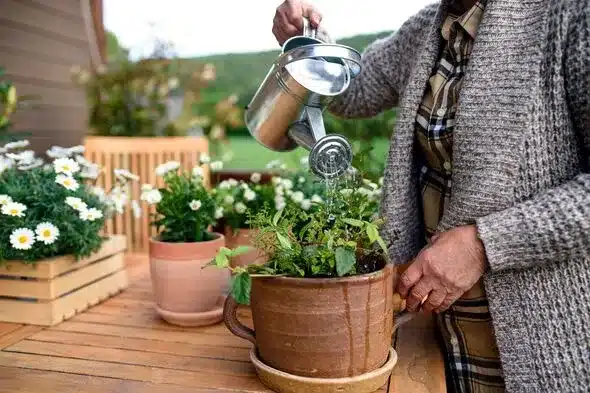
Many home gardeners struggle to keep their container plants thriving, often attributing the issue to fertilizer, sunlight, or pruning. However, a common watering technique might be inadvertently harming plants more than helping them. Professional gardener Joseph Clark, known online as @joesgarden.official, has highlighted a simple, quick adjustment that can significantly improve plant health.
The Common Watering Pitfall
Clark points out that watering potted plants from the top, especially with a watering can, can lead to a deceptive appearance of saturation. While the soil surface might look wet, the root ball at the center can remain critically dry. This phenomenon is particularly prevalent in plastic containers, where a gap often forms between the soil and the pot’s inner wall as the soil compacts or shrinks.
When water is poured from above, it tends to follow the path of least resistance. This means the water runs down the sides of the container, bypassing the central root mass and draining out through the bottom holes. Consequently, the core of the plant’s root system may not receive adequate moisture, even if the topsoil appears damp.
“Containers are a great way to grow crops if you’re renting or have limited space, but be careful when you are watering from the top,” Clark explained in a video shared on Instagram. “Although the soil may seem saturated, dig a little bit deeper, and it can often be bone dry.” This oversight can stunt growth, cause wilting, and ultimately lead to the decline of otherwise healthy-looking plants.
The Simple 30-Second Solution: Bottom Watering
Clark advocates for a technique known as bottom watering, which ensures that the entire root ball receives consistent moisture. The method is straightforward and requires minimal extra effort.
How to Bottom Water Your Plants
- Find a large tray, saucer, or watertight container that is wider than the base of your potted plant.
- Fill this tray with water.
- Place the potted plant directly into the water-filled tray.
- Allow the plant to sit in the water. The soil will gradually absorb moisture upwards through the drainage holes at the bottom of the pot.
- Continue this process until the top surface of the soil feels moist to the touch, indicating that the water has reached the top of the root ball. This typically takes anywhere from 15 minutes to an hour, depending on the soil’s dryness and the pot size.
This method guarantees that the entire root system is hydrated evenly, preventing the dry core issue associated with top watering. “Instead, try filling up a large tray or container with water and place your plant straight in,” Clark advised. “The soil absorbs the water through the drainage holes at the bottom of the pot, helping to give your plant an even drink all the way throughout.”
When Top Watering is Acceptable (with a Caveat)
Clark acknowledges that top watering is a common and often necessary practice, especially for large plants or when time is limited. He noted, “Obviously, we all water from the top, myself included, and it is absolutely fine to do so.” However, he stresses the importance of verifying that the water has penetrated the soil effectively.
To ensure proper hydration when watering from above, Clark suggests a simple check: “Just take the time to make sure the water has gone where you wanted it to go by poking a finger down into the soil.” This quick check, taking mere seconds, can prevent the common mistake of superficial watering.
He recommends incorporating bottom watering periodically: “But if you have the time and a large water-tight tray, try watering from the bottom from time to time too.” This occasional bottom soak can provide a deep, thorough hydration that complements regular top watering.
Tips for Watering Larger Plants
For very large container plants where bottom watering might be impractical, Clark offers an alternative strategy. He suggests burying a smaller, empty pot vertically in the center of the larger container, ensuring its rim is flush with the soil surface. This smaller pot acts as a direct channel to the root system. When watering, pour water directly into this buried pot. The water will then flow directly to the roots, bypassing the potential for side-channeling and ensuring deep hydration.
Additional Best Practices for Container Plants
Beyond the watering method, several other expert recommendations can help ensure container plants flourish:
Timing is Key
The Royal Horticultural Society (RHS) advises watering potted plants during the cooler parts of the day, either in the early morning or late evening. Watering during these times minimizes water loss due to evaporation from the soil surface, allowing more moisture to be absorbed by the plant.
Check Soil Moisture Regularly
Before watering, it’s crucial to assess the soil’s moisture level. A reliable method is to insert your finger about one-third of the way down into the soil. If it feels dry at that depth, the plant likely needs watering. This simple check prevents both overwatering and underwatering.
Consider Environmental Factors
Plants consume and lose water more rapidly during periods of warm, windy weather. It’s also important to remember that light rain or short showers may not penetrate the soil deeply enough to adequately moisten the root ball. Therefore, even after rainfall, it may still be necessary to water your container plants if the soil remains dry at the critical root depth.
Conclusion
By adopting the simple practice of bottom watering, or at least verifying thorough soil saturation when watering from the top, gardeners can significantly improve the health and vitality of their container plants. This minor adjustment, often requiring just an extra 30 seconds of attention, can make a world of difference in preventing the common pitfalls of container gardening and ensuring lush, thriving plants.