
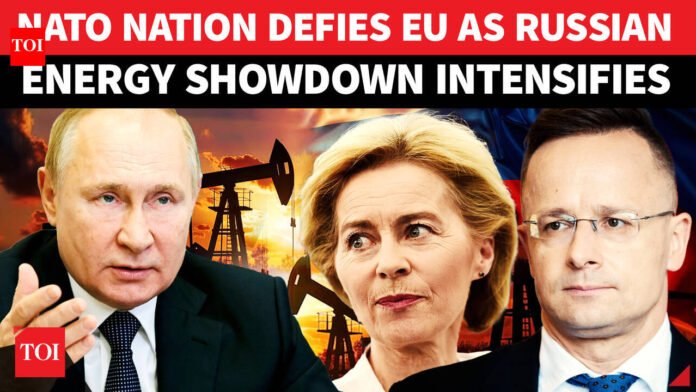
In a bold move that challenges European Union energy policies, Hungary has announced its commitment to continue purchasing Russian natural gas through Turkey, highlighting growing tensions between Budapest and Brussels over energy security.
Hungary’s Firm Stance on Energy Independence
Foreign Minister Péter Szijjártó made a decisive statement in Budapest, emphasizing that Hungary’s energy security heavily depends on the Turkish Stream pipeline. The minister stressed that alternative supply routes would not adequately meet the country’s energy needs.
The Hungarian government has taken a particularly strong position against recent EU restrictions, characterizing them as unnecessary ideological interference in national energy policy. In response, Hungary, alongside Slovakia, has announced plans to challenge these restrictions through legal action at the European Court of Justice.
Strengthening Turkey-Hungary Energy Cooperation
Beyond the immediate gas supply concerns, Hungary is actively expanding its strategic partnership with Turkey. This collaboration extends beyond energy, encompassing increased trade relations and mutual investments, effectively positioning Turkey as a crucial energy transit hub for Hungarian imports.
Rising Gas Import Numbers
Recent data shows Hungary’s gas imports through the Turkish Stream pipeline have reached record levels, with daily delivery volumes continuing to rise. This trend demonstrates Budapest’s commitment to maintaining reliable energy supplies, regardless of political pressures from Brussels.
Impact on EU Energy Politics
The situation highlights a growing divide between EU energy policies and the practical needs of member states. Hungary’s stance represents a significant challenge to Brussels’ attempts to reduce European dependence on Russian energy resources, with potential implications for broader EU energy strategy.
As this energy dispute unfolds, Hungary maintains its position that securing affordable and reliable energy supplies for its citizens takes precedence over political considerations, setting the stage for a potential reshaping of European energy dynamics.