
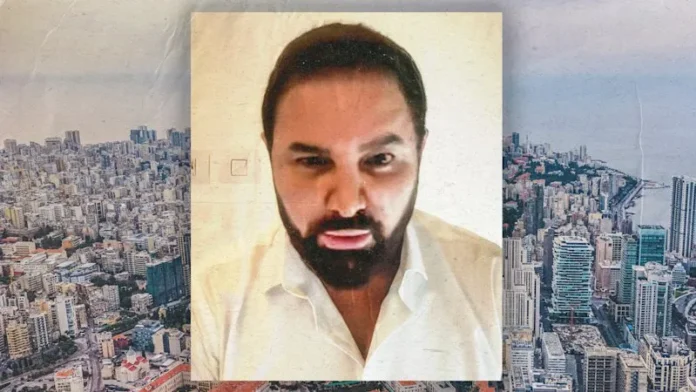
Jean Nassif, the former owner of the collapsed Toplace empire, made a highly anticipated appearance before the NSW Independent Commission Against Corruption (ICAC) on Monday, testifying remotely from his Beirut bedroom. The appearance, part of the blockbuster Operation Rosny inquiry, was marked by dramatic shifts in demeanor and controversial claims about his dealings with Liberal Party figures. Nassif, who fled Australia in December 2022 as his business empire crumbled, had previously cancelled his testimony citing health issues but appeared fit and ready to speak his mind.
Nassif’s Defense: Paying for Protection, Not Political Outcomes
Nassif vehemently denied seeking to improperly influence political outcomes, asserting that payments made to Liberal Party operatives were aimed at defending his business, dignity, and honor. He explained that offering substantial sums, which he referred to as “millions of dollars” to “the boys,” was intended to leverage their contacts for the approval of stalled apartment projects. “Of course, when you tell him there is $1 million to approve a project, they will move mountains,” Nassif stated, while insisting he never paid for specific political results.
He also addressed his efforts to have former police minister David Elliott and building commissioner David Chandler “back off.” Nassif viewed both men as significant obstacles to his Toplace projects, describing them as irritants to his business operations. He expressed a continued animosity towards Elliott, Chandler, and former radio host Ray Hadley, whom he collectively referred to as “the one person.” Nassif further alleged, without providing evidence, that the Liberal Party’s centre-Right faction, to which Elliott belonged, was comprised of “racists and bullies.”
Intercepted Calls and Volatile Testimony
During his testimony, Nassif’s demeanor fluctuated significantly. He began by promising to “speak my heart” but became increasingly animated and belligerent as the session progressed, waving his arms and rocking in his chair. At times, he closed his eyes and tilted his head upwards when attempting to recall events, and even stood to adjust the air conditioning due to the heat. The ICAC played intercepted phone calls, including one where Nassif used vulgar language to describe former premier Gladys Berejiklian. In another call, he boasted about wielding significant influence over the former Coalition government, claiming to hold “50 per cent of the power of this government now,” or even “51, 52 per cent.” He also claimed to have “f—ed Elliott sideways” and that “the boys” had orchestrated the removal of a key branch from the cabinet minister’s seat, along with “stacking” the Castle Hill branch with new members. When questioned about these statements, Nassif dismissed them as “nonsense” and an attempt to project strength, stating, “None of it is true.”
The Collapse of Toplace and Its Victims
Nassif fled Australia for Lebanon in December 2022 as his Toplace empire collapsed, leaving behind an estimated $2 billion in debts across the company and its subsidiaries. Administrators indicate that most creditors are unlikely to recover their funds. Thousands of homeowners and small business operators have been left out of pocket, representing the primary victims of Toplace’s downfall. While his buildings were failing and customers sought assistance, Nassif was allegedly channeling funds to Liberal Party operatives Charles Perrottet, Jeremy Greenwood, and Christian Ellis, who had pledged support for his business.
Limited Returns on Alleged Influence
One of the striking aspects of the Operation Rosny inquiry has been the apparent lack of significant returns for Nassif’s alleged financial outlays to political figures. While outcomes were reportedly promised and sought, few materialized in a substantial way. Two Toplace projects were indeed placed on the state government’s fast-track approval process, but this was a pathway available to many projects meeting specific criteria, and the ICAC has not suggested impropriety in their inclusion.
The inquiry also heard about efforts to undermine David Elliott, including the use of a private investigator, which Nassif’s legal team acknowledged as “inexcusable.” While the growing influence of the Liberal Party’s Right faction may have complicated Elliott’s political future, his criticism of Toplace remained unwavering.
David Chandler, the building commissioner, did resign following a “terrible smear campaign” against him, a development that would have eased scrutiny on Toplace’s defective towers. However, Chandler was persuaded to return to his role within weeks. Furthermore, Ray Hadley’s persistent campaign against Nassif and Toplace continued unabated, appearing increasingly prescient.
Nassif’s Disillusionment with Political Fixers
Interestingly, Nassif expressed a desire to sever ties with some of his Liberal Party contacts, stating they “told me lots of bullshit” and “created more damage than help.” This sentiment suggests a degree of disillusionment with the effectiveness of the political assistance he allegedly sought and received. The very existence of the Operation Rosny inquiry itself serves as evidence, according to the narrative, that Nassif’s claims of being misled by these contacts hold some truth.
Legal Constraints and Future Appearances
The ICAC lacks the jurisdictional authority to compel Nassif, residing in Lebanon, to give evidence. His voluntary appearance raised questions about his motivations. Counsel assisting the commission, Dr Peggy Dwyer, SC, navigated legal, technical, and language barriers, acknowledging Nassif’s freedom to disconnect at any time. Despite these challenges, Nassif agreed to continue his testimony the following morning. An Australian Federal Police arrest warrant remains active, making a return to Australia to face charges unlikely.
Conclusion
Jean Nassif’s remote testimony before the ICAC provided a dramatic and often contradictory account of his business dealings and alleged political influence. While he defended his actions as necessary business protection, the inquiry continues to probe the extent of his alleged attempts to manipulate political processes and the consequences for those affected by the Toplace collapse. The proceedings highlight the complexities of cross-border investigations and the challenges of holding individuals accountable when they are beyond the court’s immediate reach.