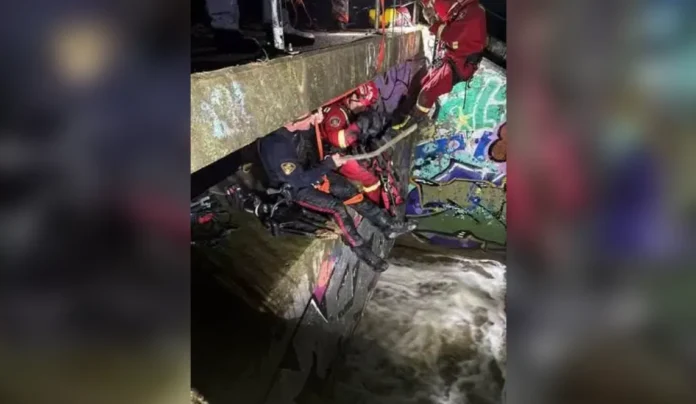
A man was successfully rescued from a storm drain in Saskatoon on Friday evening after becoming trapped by a substantial volume of stormwater. The incident occurred around 8 p.m. at a dog park located in the 3700 block of Kinnear Avenue, prompting a response from local authorities.
Stormwater Surge Leads to Rescue Operation
Saskatoon police were the first to arrive on the scene after receiving a call for assistance. Upon arrival, an officer immediately assessed the situation and entered the storm drain to locate the trapped individual. The man was found pinned against a gate, a precarious position caused by the forceful flow of stormwater resulting from heavy rainfall.
With the Saskatoon Fire Department en route, the initial responding officer took immediate action to ensure the man’s safety. According to police reports, the officer crawled into the storm drain and reached through the bars of the gate. This critical intervention helped keep the young man’s head above the rising water, preventing a more dire outcome.
Fire Department Extrication Efforts
The Saskatoon Fire Department confirmed that two rescue trucks were dispatched to the scene to carry out the extrication. Firefighters worked swiftly to free the trapped individual. The process involved cutting through the storm drain’s grating. Once the obstruction was removed, the man was secured with a harness and carefully lifted to safety.
Following his successful rescue, the man received immediate medical attention at the scene. Paramedics assessed his condition before he was transported to a local hospital by Medavie for further evaluation and care. The exact nature of his injuries, if any, has not been publicly disclosed.
Understanding Stormwater Systems and Risks
This incident highlights the potential dangers associated with urban stormwater systems, particularly during periods of intense rainfall. Storm drains are designed to manage excess water from precipitation, channeling it away from streets and properties. However, during severe weather events, the volume and velocity of water can overwhelm these systems, creating hazardous conditions.
How Storm Drains Work
Storm drains, also known as storm sewers, are part of a municipal infrastructure designed to collect and transport rainwater and other surface runoff. Water enters the system through grates located on streets, sidewalks, and other paved surfaces. It then flows through underground pipes to a discharge point, which could be a river, lake, ocean, or a retention pond. Unlike sanitary sewers, which carry wastewater from homes and businesses to treatment plants, storm drains typically carry untreated water directly into local waterways.
Dangers During Heavy Rainfall
The primary risk associated with storm drains during heavy rain is the rapid increase in water flow and depth. The force of the water can be significant, capable of pulling objects and even people into the drains. Once inside, individuals can face several dangers:
- Strong Currents: The rushing water can easily sweep a person away, making it difficult to maintain footing or reach safety.
- Entrapment: Debris, such as branches, trash, and other floating materials, can accumulate and block drains, leading to potential entrapment. In this specific case, the man was pinned against a gate, illustrating a form of entrapment.
- Low Oxygen Levels: Confined spaces like storm drains can sometimes have reduced oxygen levels, posing a risk to anyone trapped inside for an extended period.
- Hypothermia: Cold stormwater can lead to hypothermia, especially if the person is submerged or exposed for a prolonged duration.
Preventative Measures and Public Awareness
Incidents like the one at the Saskatoon dog park underscore the importance of public awareness regarding the dangers of stormwater systems. Authorities often issue warnings during heavy rainfall, urging citizens to stay clear of storm drains, culverts, and flooded areas. Children, in particular, may be drawn to the sight and sound of rushing water, making parental supervision crucial during such weather events.
Municipalities also play a role in maintaining these systems to ensure they function effectively and minimize risks. Regular inspection and cleaning of storm drains can help prevent blockages and ensure the efficient flow of water. Public education campaigns about the importance of not littering, as trash can clog drains, are also vital components of stormwater management.
Conclusion
The successful rescue of the man from the Saskatoon storm drain serves as a critical reminder of the unpredictable nature of severe weather and the potential hazards posed by urban infrastructure. The swift actions of the responding police officer and the subsequent efforts of the fire department were instrumental in ensuring a positive outcome. This event reinforces the need for public caution during heavy rainfall and highlights the essential role of emergency services in protecting community members from environmental risks.