
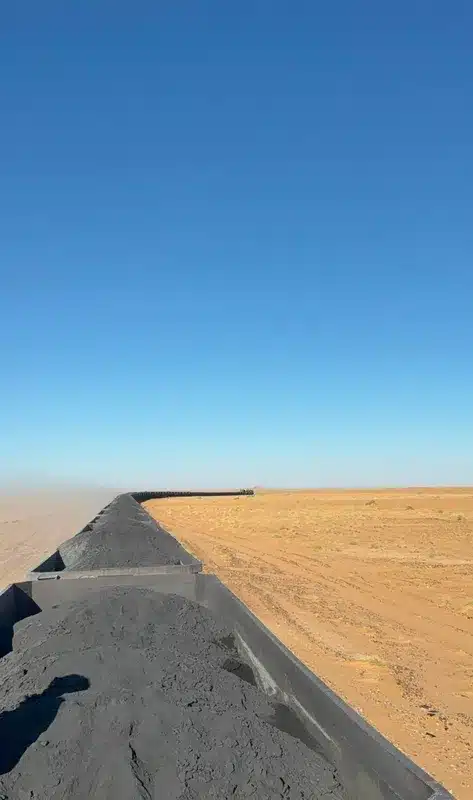
An extraordinary journey across the Sahara Desert on Mauritania’s legendary iron ore train offers an unparalleled adventure for thrill-seekers. This massive freight train, stretching up to three kilometers and carrying tens of thousands of tons of iron ore, traverses 700 kilometers of harsh desert landscape from the mining town of Zouérat to the Atlantic port of Nouadhibou. While technically forbidden, riding atop the open-air wagons is a largely tolerated practice, attracting intrepid travelers from across the globe seeking an unfiltered, albeit challenging, experience.
The Iron Ore Train: A Sahara Icon
Operated by the state mining company since 1963, Mauritania’s iron ore train is renowned for its immense length and weight, making it one of the longest and heaviest in the world. The arduous 17-hour journey across one of Earth’s most unforgiving environments has become a magnet for extreme travelers. British content creator Tom Ruck, 29, described the experience as an “extreme traveler’s fairytale,” one of the most memorable adventures he has undertaken among the 103 countries he has visited.
“It’s great for anyone who wants to create some unbelievable dad lore while they still can,” Ruck commented, sharing images of himself coated in thick black soot against the vast desert backdrop. The visual has been likened to scenes from “Mad Max,” highlighting the raw and visually striking nature of the journey.
Embarking on the Adventure
The journey to the train’s starting point is an adventure in itself. Travelers typically fly from Europe, often to Spain and then to Dakhla in the occupied Western Sahara, a route that involves navigating areas with complex geopolitical considerations. From there, overland travel by 4x4s and minivans is necessary to reach the remote northern regions of Mauritania. The specific starting point for Ruck and his companions was the small settlement of Choum, where they connected with a local guide, referred to as the “train wizard,” who possessed intimate knowledge of the train’s unpredictable schedule.
Unlike conventional travel, there are no tickets or fixed timetables. The train’s departure is often subject to the demands of its cargo operations. Ruck and his friends, anticipating an 8 PM departure, were instead roused around 3 AM for a hurried five-minute window to board. “We were tired but super excited, kind of nervous, kind of a weird butterflies feeling because it was so high on all of our bucket lists,” Ruck recounted. He likened the clandestine boarding process to a heist, “It felt like we were robbing a bank, you’re wearing masks and all the rest of it because of the iron ore and you’re slinging your bags onto trains.”
Life on the Ore Train
Boarding the train involves a straightforward climb up a ladder attached to the side of a wagon. Once aboard, travelers find themselves amidst enormous mounds of black iron ore dust. This dust is pervasive, infiltrating everything and everyone, regardless of precautions taken. The conditions are basic: there are no seats, no shelter from the elements, and no conventional restroom facilities, only a designated “toilet corner.” Food must be dry and easily consumable, such as biscuits, protein bars, and bananas, alongside ample water supplies.
The scenery, however, is breathtaking. As the train slowly snakes through the desert, the vastness and stark beauty of the Sahara unfold. “At sunrise, it’s just unbelievable. It’s barren, but the sheer size of it, and the train bending around, is crazy to see,” Ruck observed. The temperature extremes are significant; scorching heat during the day gives way to freezing conditions at night, particularly from December to February.
Travelers pass the time by taking photos and videos, or simply resting on the ore mounds, which can become surprisingly comfortable. Despite the challenges, the experience remains captivating. “Towards the end of the last few hours you do get a little bit sick of it, but I wouldn’t say bored. You keep yourself busy and you know, it’s a once in a lifetime thing,” Ruck stated.
The Aftermath and Growing Trend
Upon arrival at the destination in Nouadhibou, Ruck reported being covered in iron ore dust from head to toe, including in his ears, nose, and hair. The process of cleaning himself to feel human again took “a good four or five days of cleaning consistently.” He advises that potential riders should be prepared to be coated in iron ore for an extended period.
The iron ore train journey is emblematic of a growing trend in adventure tourism, often dubbed “darecations.” Online platforms have noted a significant surge in searches for adventure travel, indicating a rising interest among younger generations, Gen Z and Millennials, in “full-throttle, adrenaline-inspired tourism.” This is further supported by data showing an increase in specialized travel insurance for adventurous activities like trekking and mountaineering.
Essential Packing for the Ore Train
For those considering this extreme adventure, meticulous preparation is key. Based on the experiences of those who have undertaken the journey, a specific packing list is recommended:
- Ski Goggles: Essential for protecting eyes from the pervasive dust; regular sunglasses are insufficient.
- Headscarf: A full-coverage headscarf is crucial for shielding the face and hair from both the sun and the ore dust.
- Water: Ample hydration is vital in the desert environment.
- Layered Clothing: Necessary to cope with the drastic temperature changes between day and night.
- Headlamp: Indispensable for visibility during night travel and for safely boarding the train.
- Protective Bags: Rubbish bags or similar waterproof containers are needed to safeguard electronics like phones and cameras from dust and moisture.
This unique journey, while demanding and physically taxing, offers an unforgettable glimpse into the raw power of the Sahara and the resilience of human endeavor, attracting a new wave of travelers seeking experiences far beyond the ordinary.