
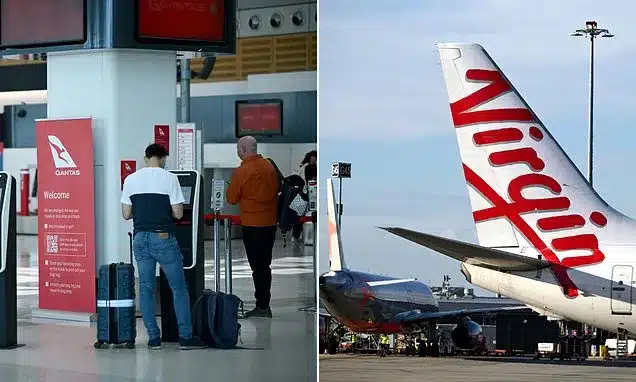
Major Australian airlines Qantas and Virgin Australia cancel hundreds of flights on key regional routes amid soaring fuel prices driven by global tensions, including the Iran conflict. These reductions primarily affect regional services and signal higher airfares ahead.
Virgin Australia’s Flight Cuts
Virgin Australia suspends its Adelaide to Cairns service indefinitely starting August 1 and the Alice Springs to Brisbane route from July 14. Affected passengers receive re-accommodation on alternative flights.
The airline also limits seasonal Darwin to Sydney flights from June 22 to October 25 and reduces Uluru to Melbourne services from three to two weekly flights beginning August 20.
Qantas and Jetstar Reductions
QantasLink cuts 88 flights on the Melbourne-Sydney route, 50 on Sydney-Brisbane, and 31 on Brisbane-Melbourne between May 18 and June 30. Perth-Sydney flights drop from 334 to 307, Melbourne-Adelaide from 384 to 361, and Brisbane-Adelaide from 246 to 234.
Temporary suspensions hit Melbourne-Coffs Harbour, Melbourne-Hamilton Island, and Adelaide-Mt Gambier services. Qantas’s low-cost arm, Jetstar, pauses Sydney-Busselton and suspends Darwin-Gold Coast flights.
Fuel Cost Pressures
Qantas reduces domestic capacity by about 5 percentage points in the fourth quarter of the 2026 financial year due to volatile fuel prices and global economic conditions. Although 90 percent of crude oil supply remains hedged, surging jet refining margins push fuel expenses for the six months ending June 30 to between $3.1 billion and $3.3 billion—an extra $600 million to $800 million.
The group collaborates with the government and jet fuel suppliers to ensure supply through May. Virgin Australia closely monitors global fuel supply chains amid ongoing uncertainties.
Affected customers receive direct contact for alternative flights or refunds.
Industry Outlook
Aviation consultant Tony Webber, former Qantas chief economist, projects earnings could fall to $544 million if Middle East conflicts persist. He anticipates capacity cuts on longer routes, where fuel represents a larger cost share and reductions yield stronger fare increases, particularly on business-heavy paths.