Refugee Week Film Festival Showcases Migrant Experiences
As World Refugee Day approaches, a prominent film festival is shedding light on the diverse and often challenging journeys of refugees. This year’s Refugee Week features a compelling lineup of films that transport audiences from the bustling refugee camps of Lebanon to the stark realities of immigration removal centers in the UK.
Diverse Narratives on Display
Among the featured films is Mahdi Fleifel’s A World Not Ours, which offers a glimpse into Ain el-Helweh, Lebanon’s largest Palestinian refugee camp. Contrasting this is Joy Gharoro-Akpojotor’s Dreamers, focusing on the experiences within an immigration removal centre. The UK’s asylum system is critically examined in Allies in Exile, a powerful first-person documentary by Syrian filmmakers Hasan Kattan and Fadi al-Halabi. This film, which premiered earlier this week, navigates the complex and often daunting path faced by asylum seekers.
Curated Shorts Explore Asylum’s Stages
A selection of four short films, curated by the refugee charity Choose Love, provides a comprehensive chronicle of the asylum-seeking process. These films delve into the hardships of life in one’s home country, the perilous journeys undertaken across land and sea, and the subsequent arrival in often unwelcoming environments marked by ostracism and enduring trauma. This event, titled Fearless Stories, took place recently and aimed to showcase films that actively “challenge division.”
“Fearless Stories” Champions Empathy
Josie Fernandez-Marelli, chief executive of Choose Love, emphasized the vital role of diverse communities in shaping the UK. “The UK wouldn’t be what it is today without all the incredible people and cultures that make it up,” she stated. “As division is growing, it’s more important than ever to work together to make sure that refugees are seen as human beings, with hopes, dreams and ambitions.”
Spotlight on Individual Stories
One of the shorts in Fearless Stories is The Long Spring. Inspired by Olly Ginelli’s volunteer work in the refugee camps of Dunkirk, the film centers on Saady, an Iraqi Kurdish asylum seeker. Saady, who had previously aided displaced people in his homeland, fled during the advance of Islamic State. After arriving in the UK and gaining refugee status, he reconnected with Ginelli to share his experiences. The film vividly portrays the harrowing hours spent evading border forces while hidden in the back of a lorry. Saady himself described the viewing experience as “very difficult,” akin to “seeing your nightmare” on screen.
Ginelli commented on the current climate surrounding immigration, noting, “There’s a heated temperament at the moment about people coming over here, but what they don’t realise is that a lot of people are being forced into jobs where they’re working 80 hours a week and living with 30 people in a two-bedroom house.”
Satire and Real-World Echoes
Max Fisher’s film Rule, Britannia satirizes the actions of would-be vigilantes. The story follows Rob and his friend Walshy, who embark on a mission to “stop the boats” across the Channel. However, their own vessel sinks, forcing them into a moral quandary when an overcrowded refugee boat appears as their potential saviour. The film’s farcical elements gained an unexpected real-world parallel with the news that a boat associated with an individual known for similar excursions had also sunk. Fisher remarked that such an instance of life imitating art “seemed inconceivable at the time we wrote the film.” He added a cautionary note, stating, “If we don’t, as a society, get a hold of what is going on, we are going to sleepwalk into not Nigel Farage being our PM. We are going to sleepwalk into something much worse than we have now.”
Focus on Afghan Women’s Resilience
Elham Ehsas’s Bafta-nominated film Yellow focuses on the plight of women in Taliban-controlled Afghanistan. The film uses the seemingly ordinary act of shopping for clothes, which in this context requires the full-cover chadaree, to highlight the restrictions imposed. Ehsas stated that the film serves as a reminder to those who have averted their gaze from Afghanistan since the Taliban’s return in 2021. Her aim is to “show Afghan girls and Afghan women in a different light… they’re funny, they’re brave, they’re intelligent.” She also pointed out that “their fundamental rights have been rescinded and this is a society that is almost an apartheid state between two genders.”
Child’s Perspective on Displacement
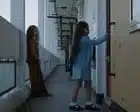
Set on a London housing estate, Alexandra Wain’s In the Clouds offers a perspective on the refugee experience through the eyes of a six-year-old named Sara. The film utilizes a claustrophobic atmosphere and deliberate color choices to convey a pervasive sense of loss. Wain believes the film’s success lies in its ability to foster “a connection and empathy to these characters.” She has received messages from viewers, including recently arrived Hongkongers, who have related to the feelings of alienation depicted. Wain concluded by emphasizing the importance of engaging with diverse stories: “As people, we need to feed our inquisitive minds, and Refugee Week allows us to engage with arts, culture and stories from people we may never have a chance to engage with.”