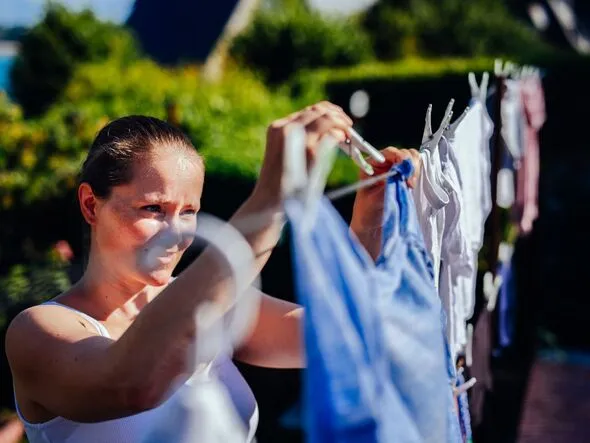
As the UK embraces warmer weather, many households are opting to dry their laundry outdoors, leveraging the sunshine to save on energy costs and achieve that fresh, airy scent. However, experts are cautioning that a common practice could inadvertently damage cherished garments. The way clothes are secured on the washing line, particularly the use of clothes pegs, can lead to a host of issues, from stubborn creases to fabric damage and colour fading.
The Perils of Clothes Pegs
While seemingly innocuous, clothes pegs can inflict damage on fabrics, according to advice shared by laundry specialists. The core problem lies in the concentrated pressure applied by the peg’s grip. When clipped too tightly or left on for extended periods, pegs can create pressure marks and small creases. This focused stress on a single area of the fabric over time can result in permanent dents, shiny patches, stretched areas on shoulders and necklines, and even a noticeable fading of colour.
Fashion experts suggest that for particularly delicate items, completely avoiding clothes pegs might be the best approach. They highlight that the constant clamping action puts unnecessary strain on the material, potentially shortening the lifespan of clothing.
Alternative Drying Methods for Garment Care
To mitigate the risks associated with traditional clothes pegs, several alternative strategies can be employed to protect laundry while drying outdoors. One recommended method involves using an indoor drying rack that can be moved outside. This approach offers a way to dry clothes in the fresh air without direct pegging to a line.
This method is praised for its ability to extend the lifespan of clothing by minimising the wear and tear often associated with heat exposure. Furthermore, sunlight itself possesses natural antimicrobial properties and can act as a gentle bleaching agent, particularly beneficial for keeping whites bright.
Enhancing Whites and Managing Stiffness
For those looking to boost the whitening effect of sun-drying, a simple trick involves lightly spritzing clothes with white vinegar before hanging them outdoors. The sun’s rays can then work their magic, helping to maintain the freshness of white fabrics.
However, a word of caution is advised, especially for items made from natural fibres like cotton. These fabrics can sometimes become stiff when dried entirely outdoors. To counteract this, a hybrid approach is suggested: partially dry items outside and then finish them off with a few minutes in a tumble dryer. This can help retain a softer feel.
Minimising Creases and Ironing
Beyond the issue of pegs, general techniques for hanging laundry can significantly reduce the need for ironing. Reshaping garments gently before hanging them can help smooth out initial creases. Additionally, shaking clothes vigorously before they go on the line helps to set them in a less creased state.
Proper spacing is also crucial. Overcrowding the washing line prevents items from drying evenly and encourages wrinkles. It’s recommended to spread items out, unbutton shirts, unzip jackets, and unroll sleeves to allow for better air circulation and more uniform drying.
Strategic Hanging for Different Garments
The orientation in which clothes are hung also plays a role in preventing stretching and minimising creases. Tops should ideally be hung from their bottom hem, while trousers are best supported from the waistband. This prevents unnecessary weight from pulling down on delicate areas.
Special care should be taken with delicate knitwear. These items are best dried flat to prevent the weight of the water from stretching them out of shape. For shirts, hanging them neatly on hangers can help maintain their form and reduce wrinkles. If clothes pegs are still preferred for shirts, clipping them by the bottom edge is advised to minimise visible marks and simplify the subsequent ironing process.
Windy Conditions and Unattended Laundry
While enjoying the benefits of outdoor drying, it’s essential to remain mindful of weather conditions. Leaving laundry unattended outside, especially in windy areas, poses a risk of garments being blown away. Therefore, ensuring laundry is securely fastened or using methods like the indoor rack that can be brought inside quickly is prudent.
Conclusion: Smart Drying for Longer-Lasting Clothes
Drying laundry outside during the summer months offers numerous advantages, from cost savings to a fresher scent. By understanding the potential pitfalls, such as the damage caused by clothes pegs and the importance of proper hanging techniques, households can significantly improve their laundry care. Employing strategies like using drying racks, strategic peg placement, and correct garment orientation not only helps to keep clothes looking their best but also contributes to their longevity, making smart drying a key component of effective clothes care.