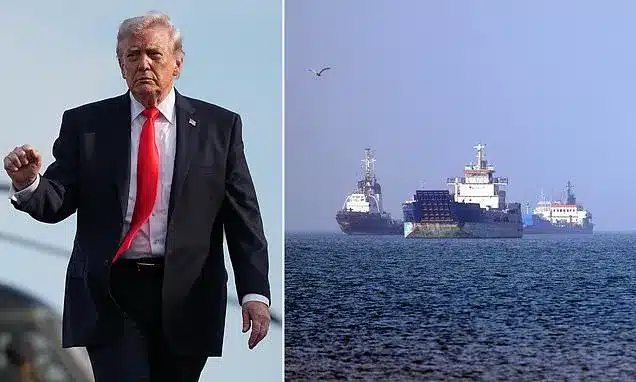
President Trump has pledged to reopen the Strait of Hormuz, but challenges persist amid Iran’s ongoing blockade. On Sunday, he outlined plans for the U.S. Navy, supported by 100 aircraft, to release around 2,000 ships and 20,000 crew members currently trapped in the Persian Gulf. Dubbed Operation Freedom, the initiative aimed to launch Monday morning to restore global energy and fertilizer supplies, yet little progress appears evident so far.
High Risks for U.S. Forces
U.S. officials highlight significant dangers, including potential Iranian strikes on American vessels that could spark domestic backlash and prompt a naval withdrawal. Despite these hurdles, Iran’s internal struggles offer leverage. The nation grapples with severe economic fallout from sanctions, exacerbated by inflation, shortages, and blocked oil exports.
Iran’s Desperate Export Measures
Tehran resorts to makeshift solutions, such as small tankers smuggling oil across the Pakistan border and tanker trains heading to China through Central Asia. Without normalized exports from the Kharg Island terminal soon, storage capacities will overflow, forcing well closures. Prolonged halts risk permanent damage from water ingress.
Sources indicate Iran maintains ample munitions but faces a looming cash shortage. Unpaid troops have historically mutinied or deserted. Negotiating demands consistently seek U.S. sanctions relief, underscoring economic vulnerability.
U.S. Military Buildup Intensifies
Trump deploys the USS George H.W. Bush to the Red Sea, alongside smaller carriers transporting up to 15,000 Marines and missile destroyers near Iran’s southern shores. Prior airstrikes over several weeks have failed to break the blockade. Further campaigns could drag on, potentially triggering a global energy crisis and recession.
Global Pressures and Historical Parallels
Rising U.S. fuel prices could sway voters, while allies weigh backing Trump against separate deals with Iran. A rift with European partners might enable a U.S. pullback, framed as a strategic victory. This scenario echoes Britain’s 1956 Suez Canal setback, where Winston Churchill noted of the failed operation launched by Anthony Eden: ‘I should never have dared start it, but I should never have dared stop.’
With midterm elections and economic downturns approaching, Trump confronts mounting time constraints in resolving the Gulf crisis.