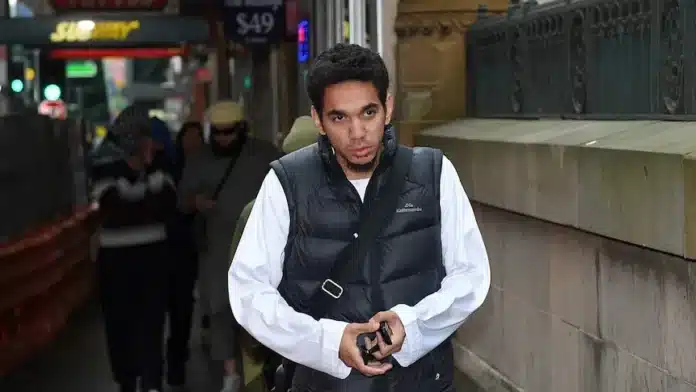
A self-styled Islamic preacher convicted on drug charges faces continued imprisonment after the New South Wales parole board denied his parole application for the second time. Mohammed Junaid Thorne, now 36, remains behind bars due to concerns over his communications with convicted terrorists and past expressions of support for Islamic State ideology.
Drug Conviction and Initial Sentencing
Thorne received a nine-year sentence in 2021 for supplying large quantities of cocaine and ecstasy to an undercover officer during a counter-terrorism police operation. He became eligible for parole in January 2025 but was denied release on grounds related to potential involvement in extremism.
Parole Denial Reasons
On April 27, the parole board determined it could not assure Thorne would not “engage in, incite, or assist others to engage in terrorist acts or violent extremism” upon release. This marks the second rejection, with Thorne eligible to reapply annually. His full sentence concludes on July 30, 2028.
Background and Radical Associations
Born in Perth, Thorne moved to Saudi Arabia at age 10, where he described receiving a strict Muslim education. Saudi authorities deported him in 2013 following protests over his brother Shayden Thorne’s four-year terrorism sentence. Shayden later participated in a foiled plot by six Australians to sail to the Philippines and aid militants in imposing Sharia law, earning the group the moniker “tinny terrorists.”
Upon returning to Australia, Thorne declared himself a sheikh under the “Millatu Ibrahim” banner, mirroring a banned German extremist group whose leaders died fighting for Islamic State in Syria and Iraq. Authorities investigated his 2014 social media posts praising Islamic State’s capture of Mosul. Thorne has consistently denied supporting violent extremism or terrorist affiliations.
In 2015, he served nine months for traveling under a false name before relocating to Sydney, where the drug offenses occurred. He also connected to Melbourne’s now-closed Al Furqan Centre, known for promoting violent jihad.
Prison Correspondence with Terror Convicts
The board reviewed 800 pages of letters between Thorne and 10 inmates convicted of terrorism offenses. Contacts included:
- Talal Alameddine, who supplied the firearm used by 15-year-old Farhad Mohammad to kill NSW police employee Curtis Cheng in a 2017 Sydney attack.
- Mohammad Kiad and Omar Al-Kutobi, serving 20-year terms for plotting a 2015 stabbing rampage after filming pledge videos with Islamic State flags.
- Isaac El Matari, imprisoned for schemes to establish an Islamic State chapter in Australia.
- Bourhan Hraichie, convicted of planning an Islamic State-inspired police shooting and assaulting a cellmate.
Prosecutors noted the exchanges showed no explicit terrorism endorsement but highlighted Thorne’s prior Islamic State sympathies. The correspondence demonstrated persistent Salafist ideology adherence, per extremism expert Dr. Joshua Roose.
Expert Assessments and Deradicalization Efforts
Dr. Roose’s report cited Thorne’s past Islamic State flag lecture, social media endorsements of its leaders, and ties to terrorism advocates, including slain radical Abdul Numan Haider. A Countering Violent Extremism report indicated no shift in Thorne’s views, with fellow inmates still viewing him as a religious authority.
Thorne has participated positively in the PRISM deradicalization program since July 2023, fostering resilience against extremism. His lawyer cited a psychologist’s assessment that he holds no extremist ideology. However, unapproved calls from February to April 2025 revealed unchanged extremist beliefs, contradicting program statements.
The board emphasized evaluating the full evidence, overriding isolated positive indicators.