
An unfinished drawing of a turtle shell, marked by the distinct imprints of teeth, rests in a quiet studio in southwest Queensland. This piece represents the final work of Gunggari artist Bill Dodd, a man who for decades created intricate artworks without using his hands. Instead, Dodd brought his detailed depictions of horses, birds, and the Australian landscape to life by holding a pen firmly between his teeth.
Born and raised in Mitchell, a town located approximately seven hours west of Brisbane, Dodd taught himself to draw over many years while living with paralysis from the chest down. His wife, Tracy Dodd, shared that he taught them about navigating daily challenges with resilience, a testament to his long-term experience as a tetraplegic (also known as quadriplegic).
Dodd’s life took a dramatic turn just before his 18th birthday. While swimming in a local river, he dove headfirst and struck the riverbank, resulting in a broken neck and spinal cord damage. The accident transformed the active young man, who was passionate about sports and often on horseback, into a wheelchair user. Tracy Dodd recounted that he initially believed his life was over, recalling his former love for boxing, football, and his general fitness.
Finding a Voice Through Art
In the aftermath of his accident, Dodd eventually discovered a profound outlet in writing and drawing. His wife explained that when someone encouraged him to put his thoughts to paper, he began a journey that he never stopped. This pursuit revealed a remarkable talent he possessed.
Tracy Dodd met Bill years after his accident and observed the quiet emotional burden he carried. She expressed sadness that he had lived for so long feeling like a hardship or a burden. “You don’t go without because you think that you’re a burden,” she stated, emphasizing her desire for him to experience a life beyond the confines of a hospital and to know he was loved for who he was.
Even after being diagnosed with advanced bladder cancer in 2024, Mr. Dodd maintained a spirit of resilience and never voiced complaints. Today, Tracy Dodd still occasionally finds chewed pens around their home, a constant reminder of his unique method and enduring spirit.
“He was one of a kind. For someone who couldn’t move he had such a big presence,” she said. “Our life was so much different to everyone else’s, but it worked. It worked for us. He deserved everything we could give him.”
A Lasting Legacy Celebrated
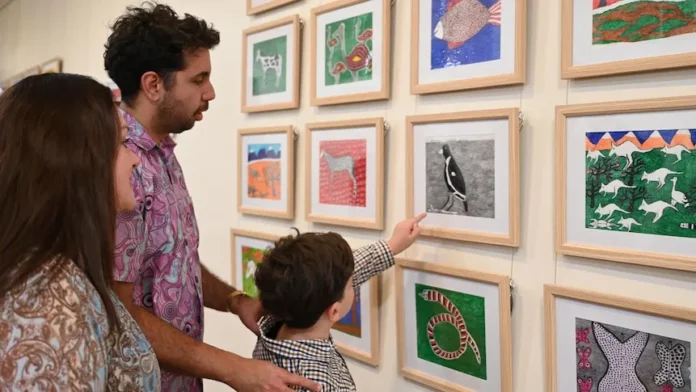
Now, Bill Dodd’s lifelong dedication to his craft is being shared with a wider audience. The Yimbaya Maranoa, a First Nations art collective to which Dodd belonged, has dedicated their new exhibition, ‘Terra-Rara Rare Earth,’ in his memory at the Roma on Bungil Gallery.
Vernessa Fien, a fellow Gunggari artist and long-time friend of Dodd, found curating the exhibition to be an emotional experience. “It’s hard not to get emotional about it. He’s achieved so much,” Ms. Fien remarked. She highlighted his accomplishments beyond art, noting his contributions as an author of a book and poetry, as well as his past as a skilled sportsperson and cattleman. “I think he’d be very humble in his thoughts in that we were doing something for him.”
Walking through the gallery, surrounded by decades of Dodd’s work adorning the walls, Tracy Dodd was overcome with emotion. “Bill’s family, my children, and myself just want to get his work out there and show people what can be done,” she shared. “This man had a big disability but he didn’t let that stop him. Once he set his mind to something he would get it done.”
Bill Dodd’s story is a powerful testament to the human spirit’s capacity to overcome adversity and find profound expression, leaving behind a legacy that continues to inspire.