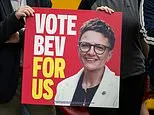
Labour is anticipated to retain control of the Greater Manchester mayoralty, according to a recent poll. The election follows Andy Burnham’s departure from the role to return to Westminster. The survey indicates that the Labour candidate, Bev Craig, is projected to secure a significant portion of the vote in the initial round and ultimately win in a second-round run-off against either the Green Party or Reform UK.
Greater Manchester Mayoral Election Dynamics
The electoral system for this mayoral contest differs from the previous one in 2024. Instead of the first-past-the-post method, the supplementary vote system will be employed. This system allows voters to cast a first and a second preference vote. If no candidate secures over 50 percent of the first-round votes, a second round is triggered, where the votes for the two leading candidates are recounted, incorporating voters’ second preferences.
A poll conducted by Find Out Now suggests that Bev Craig, the Labour candidate, is on track to receive 38 percent of the vote in the first round. This places her ahead of other contenders, with the Green Party expected to garner 22 percent and Reform UK around 19 percent. The poll further predicts that in a second-round contest, Craig would defeat the Green candidate by a margin of 64 percent to 36 percent. Against Reform UK, Craig is forecast to win with 66 percent of the vote compared to 34 percent.
Shifting Political Landscape
The projected performance of the Green Party, moving from a distant fifth place in the previous election to a predicted second place, highlights a fragmentation in the political landscape. Meanwhile, Reform UK, which had expressed ambitions for the mayoralty, appears to be falling short of expectations. The party’s focus seems to be divided, with significant attention also directed towards the Clacton by-election, a contest crucial for retaining Nigel Farage’s parliamentary seat.
Adding to the complexity of the political environment, the hard-right Restore party, led by Rupert Lowe, is forecast to secure fourth place with 9 percent of the vote. This places them narrowly ahead of the Conservative Party, whose candidate is projected to receive 8 percent. Notably, the Tories had secured second place in the 2024 mayoral election, indicating a potential decline in their support in this region.
Meet the Candidates
Bev Craig, the leading Labour candidate, currently holds the position of Deputy Mayor for Greater Manchester, overseeing portfolios related to the economy, business, and inclusive growth. She ascended to the leadership of Manchester City Council in December 2021, succeeding Sir Richard Leese. Originally from Northern Ireland, Craig moved to Greater Manchester at the age of 18. She holds the distinction of being the city’s first female council leader and its first openly LGBT leader.
The other candidates also bring their own political backgrounds. Geraldine Coggins, representing the Green Party, serves as a councillor in Trafford. Phil Eckersley, the Conservative candidate, is also a Trafford councillor. Sian Astley, the Reform UK candidate, leads the party’s group on Manchester City Council. The Restore Britain candidate is Marlon West, known for his advocacy against sexual abuse.
Implications of the Supplementary Vote System
The supplementary vote system is designed to ensure that the eventual winner has broader support, having secured at least 50 percent of the vote, either directly or through second preferences. This contrasts with the first-past-the-post system, where a candidate can win with less than half the votes if the opposition is sufficiently divided. The poll results suggest that even with the complexities of the supplementary vote, Labour’s Bev Craig is well-positioned to secure victory, demonstrating a strong initial mandate and the potential to consolidate second preferences effectively.
Conclusion
The latest polling data points towards a Labour hold on the Greater Manchester mayoralty, with Bev Craig emerging as the frontrunner. The election is shaping up to be a test of the evolving political allegiances in the region, with the Green Party showing increased support and Reform UK facing challenges in translating its national profile into local mayoral success. The performance of smaller parties like Restore also adds a layer of intrigue to the electoral dynamics. As the election progresses, the application of the supplementary vote system will be a key factor in determining the final outcome.