This week’s literary landscape offers a diverse journey, transporting readers from the violence-scarred terrain of Mexico and the rugged beauty of Scottish islands to the untamed wilderness of Tasmania and the gritty streets of colonial Sydney. Critics have meticulously reviewed the latest fiction and non-fiction arrivals gracing bookshelves.
Fiction Highlights
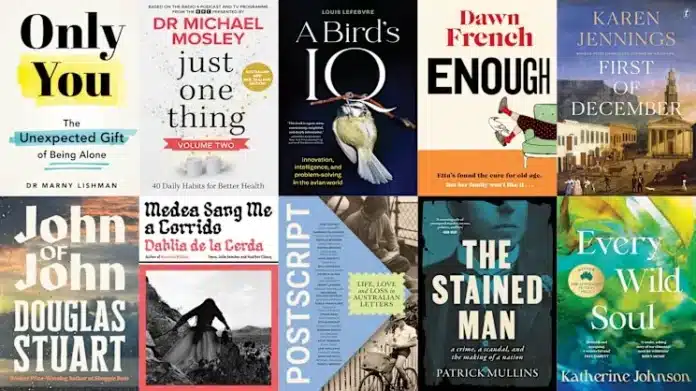
Medea Sang Me A Corrido by Dahlia de la Cerda
The pervasive issue of femicide in Mexico has become a significant focus in contemporary literature. Dahlia de la Cerda’s Medea Sang Me A Corrido confronts the enduring reality that these atrocities have not ceased, offering a human perspective on the protracted conflict between cartels and governmental forces. Each chapter introduces a character impacted by the violence, from the desperate wife of a cartel leader to a young boy ensnared by a street gang. The narrative culminates with the appearance of Medea, the defiant figure from Greek myth, reimagined in a modern, gothic guise adorned with snake tattoos, offering either aid, retribution, or solace. De la Cerda masterfully crafts a sense of urgency and danger, echoing the narrative drive of Roberto Bolano’s The Savage Detectives. The prose largely employs a vernacular that mirrors spoken language, imbuing the work with a palpable immediacy as it challenges and subverts patriarchal structures. This novel is a compelling read for anyone interested in contemporary Mexican literature.
John of John by Douglas Stuart
Scottish author Douglas Stuart, renowned for his Booker Prize-winning novel Shuggie Bain and the equally acclaimed Young Mungo, presents John of John. While previous works delved into parental dysfunction, closeted homosexuality, and the societal impact of class in Glasgow, this latest novel charts a new direction. Though queerness and societal prejudice remain central, the narrative feels less constrained. The story follows Young Cal, a recent art school graduate facing financial hardship, who returns to his ancestral home on the Isle of Harris. His father, John, a devout Presbyterian sheep farmer, struggles to understand his son’s unconventional appearance and beliefs. John is also oblivious to the burgeoning desires that led Cal to seek out companionship among other solitary men. Maintaining a delicate balance is Cal’s Glaswegian grandmother, Ella, who often clashes with her son-in-law. As time progresses, community tensions escalate, forcing a confrontation in this latest bleak yet sensitive and engaging novel from a prominent Scottish voice.
Every Wild Soul by Katherine Johnson
Tasmanian biologist and writer Katherine Johnson has secured the inaugural HarperCollins Australian Fiction Prize for her novel Every Wild Soul. The book partially explores the coming-of-age of 18-year-old Min, who grapples with her father’s overprotective nature as the head ranger of remote Maria Island. Min seeks independence, finding an ally in Werner, an eccentric biologist passionate about conservation. Meanwhile, a journalist from London, Lucie, arrives. Haunted by a family connection to the extinction of the thylacine, Lucie is on a mission to investigate a project aimed at saving the endangered Tasmanian devil. The arrival of a storm-brings a stranger to the island, a clear nod to Shakespeare’s The Tempest, amplifying the novel’s exploration of mortality. Johnson’s writing excels in its rich ecological depictions, celebrating the beauty and interconnectedness of nature. She also crafts an intricate emotional landscape for her coming-of-age narrative. While the novel touches upon the restorative power of the natural world, it does so with a subtle insistence on its mystery and capacity to inspire, avoiding overly sentimental portrayals.
First of December by Karen Jennings
South African author Karen Jennings, known for her Booker longlisted novel The Island, delivers a deeply compelling historical novel centered on a pivotal moment in South African history: the abolition of slavery on December 1, 1838. The narrative follows two distinct threads. One traces the journey of a runaway slave, a mother who lost her child and flees in the week preceding emancipation, seeking her lover in Cape Town. The other strand explores a strained marriage. Caroline, an English bride, despises her husband James and the provincial colonial setting they inhabit. James, on the verge of depleting Caroline’s dowry, is desperate to quickly amass a fortune. A helpful synopsis of historical events precedes the novel, reminding readers that the abolition of slavery would soon give way to over a century of continued racial injustice and oppression. Jennings imbues her characters, navigating profound social upheaval, with empathy and psychological depth as they strive for freedom within a colonial framework that distorts the very meaning of liberty.
Enough by Dawn French
Comedian Dawn French ventures into novel writing, bringing her signature sarcastic wit and a penchant for dark themes to her work. In Enough, French tackles end-of-life decisions with a unique perspective. Etta, a healthy and content 68-year-old, surprises her family and friends during a beach gathering by announcing her intention to end her life. Her decision is not driven by terminal illness but by a desire to avoid the anticipated difficulties and distress of old age. The novel poses questions about whether Etta’s choice is an act of agency or an immature response to the inevitable challenges of aging. While her loved ones hold strong opinions, the narrative explores Etta’s motivations, her plans for her remaining time, and the possibility of changing her mind. French crafts a surprisingly tender exploration of suicide and aging, punctuated by humorous scenarios, larger-than-life characters, and sharp, witty dialogue.
Non-Fiction Insights
The Stained Man by Patrick Mullins
The life of solicitor and politician Richard Meagher (1866-1931) is presented with a dramatic arc, reminiscent of a Balzac novel, a comparison Meagher himself reportedly made. Biographer Patrick Mullins meticulously reconstructs Meagher’s story, with a central focus on 1895 and his successful defense of George Dean, accused of attempting to murder his wife with arsenic. This triumph propelled Meagher into the NSW parliament, marking the peak of his career. However, hubris led to his downfall when, with casual self-satisfaction, Meagher confessed to the Chief Justice of NSW that Dean was indeed guilty and that he had manipulated him into a confession. This revelation led to his disbarment and the lifelong pursuit of redemption from his tarnished reputation. The narrative, imbued with a touch of comédie humaine, spans from Sydney’s backstreets to the halls of parliament, offering a portrait of a nation in formation and a life defined by a profound moral failing.
Only You by Dr Marny Lishman
Philosopher Arthur Schopenhauer’s assertion that true freedom is found in solitude is explored by psychologist Marny Lishman in Only You, a guide to the art of being alone. Lishman argues that societal conditioning often equates being alone with loneliness. When relationships end, well-meaning friends often push for new connections as a solution to unhappiness. Lishman, who has personally embraced solitude, presents being alone as a “gift.” She contends that embracing stillness, occasional unease, and silence can lead to personal transformation and a clearer understanding of one’s desires. The advice offered is grounded and avoids superficiality, acknowledging the painful aspects of grief and heartbreak through case studies and personal experience. The book blends practical guidance with memoir, recounting experiences like the “exhilarating anonymity” of visiting London for the first time and observing her grandfather navigate life after his wife’s death. The writing is both immediate and practical.
A Bird’s IQ by Louis Lefebvre
Biologist Louis Lefebvre’s A Bird’s IQ examines the diverse methods for assessing avian intelligence, including the intriguing string test. One particularly striking example involves hooded black crows in Sweden, who collaboratively retrieved a fisherman’s line from an icy lake, with one group pulling while another stood on the line to prevent it from slipping back, ultimately securing the fisherman’s catch. Another fascinating account details how blue tits in England, around 1921, independently discovered how to open milk bottles to access the cream. This discovery rapidly spread among non-migratory tits across the country, raising questions about simultaneous innovation. Lefebvre takes readers on a global exploration of these phenomena. While the text can become technical, Lefebvre’s approach is lighthearted and often amusing, suggesting that being called a “bird-brain” might, in fact, be a compliment.
Postscript: Life, Love and Loss in Australian Letters
In an era dominated by digital communication, Postscript: Life, Love and Loss in Australian Letters, a collection from the National Library of Australia Publishing, serves as a timely reminder of the enduring art of letter writing. This compilation, spanning the 19th and 20th centuries, is presented alongside responses from contemporary writers, historians, and commentators. For instance, British-born suffragist Edela Pankhurst’s 1936 letter to former suffragette comrades, reflecting on the struggle in the UK, is paired with journalist Amy Remeikis’s contemporary commentary on social “pushback” and the “trad wife” subculture. Poet and novelist David Brooks responds to a letter from Norma Brooks (no relation) about her mother’s death with a poignant letter to his own mother, who passed away 46 years prior. Initially perceived as a potentially sentimental concept, the collection ultimately proves its efficacy, fostering a connection between different eras.
Just One Thing: Forty Daily Habits for Better Health by Dr Michael Mosley
Dr Michael Mosley, the late presenter of a popular BBC podcast known for simplifying complex health information into digestible advice, offers Just One Thing: Forty Daily Habits for Better Health. While some tips, like the benefits of nuts and extra virgin olive oil, are widely known, many others are novel. Breathing through the nose is presented as a method to calm the body and lower blood pressure. Similarly, reading a poem aloud daily is suggested to slow breathing and reduce stress through the rhythm of the words. The book also includes unconventional advice, such as walking backward to improve stability and cognitive function. Mosley outlines simple, actionable habits for enhanced well-being, covering topics from the advantages of reheating pasta and learning a musical instrument to reducing mobile phone usage, all presented in an informed, light, and entertaining manner.
What Else is Happening in the Book World?
- Lily King’s The Heart of the Lover is reportedly eliciting significant emotional responses from readers, prompting them to reconnect with past relationships.
- A particular graphic novel has achieved literary historical significance and comes highly recommended.
- Francesca de Tores has accomplished something truly remarkable with her second novel.
- A Nobel Prize winner has reportedly not yet read his daughter’s latest book.